Africa at a Crossroads: UNECA Urges Swift AI Adoption to Avoid Economic Marginalization
April 1, 2026 – The United Nations Economic Commission for Africa (UNECA) has issued a stark warning to African policymakers: without swift and decisive action to harness data and frontier technologies like Artificial Intelligence (AI), the continent risks being left behind in the global digital economy. Speaking at the opening of the Committee of Experts segment of the Conference of African Ministers of Finance, Planning and Economic Development in Tangier, Morocco, ECA Deputy Executive Secretary for Programme Support Mama Keita emphasized that technological innovation is not merely an option but an imperative for Africa to unlock its development potential and enhance its global competitiveness.
The Urgency of Digital Transformation
Africa has long been recognized for its immense potential, with a youthful population, abundant natural resources, and growing markets. However, despite averaging 3.5 percent GDP growth between 2000 and 2023, this expansion has largely been driven by capital and labor accumulation rather than productivity gains. Keita highlighted that this imbalance can only be corrected through innovation and advanced technologies. Frontier technologies, including AI, the Internet of Things (IoT), and biotechnology, are globally boosting productivity, enhancing competitiveness, and enabling economic diversification. Yet, Africa has been slow to fully embrace this digital revolution.
Keita, delivering remarks on behalf of ECA Executive Secretary Claver Gatete, questioned why Africa is not leveraging these technologies to utilize its natural resources and tap into its demographic dividend. The conference, themed ‘Growth through innovation: harnessing data and frontier technologies for the economic transformation of Africa,’ comes at a critical moment as Africa gains global attention as the next frontier for investment and human capital development. The message is clear: the continent must proactively integrate these technologies to achieve sustainable economic growth and structural transformation.

The Promise of AI for Africa
Digital platforms, underpinned by frontier technologies such as AI, IoT, and blockchain, hold significant potential to address some of Africa’s most pressing challenges. They can reduce poverty, generate employment opportunities, promote economic integration, and drive overall economic growth. Across the continent, examples already exist of how technology is driving development: mobile-money platforms are transforming economies by lowering transaction costs, boosting efficiency, enhancing access to finance, and advancing financial inclusion.
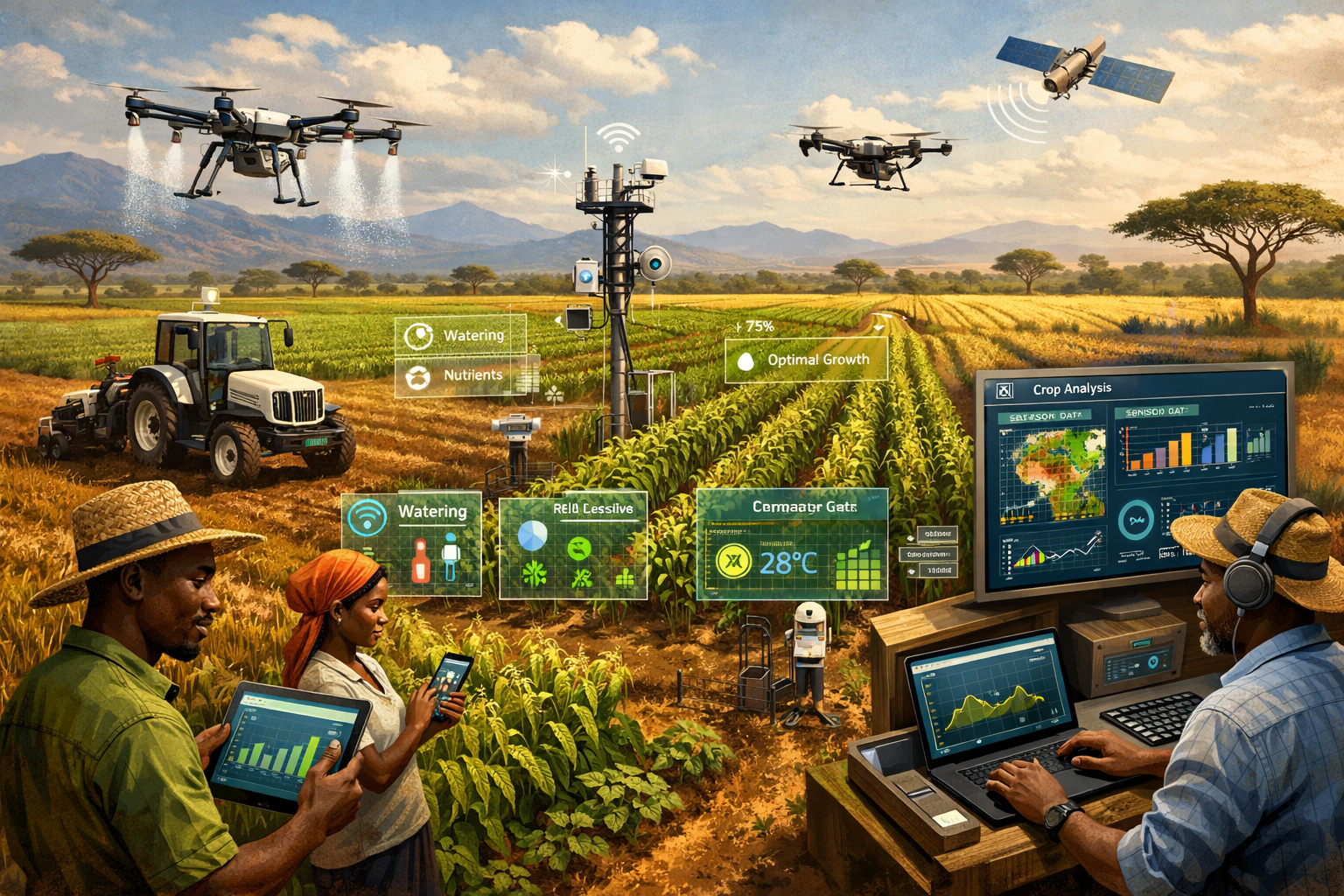
Africa’s rich endowment of critical minerals, essential for clean-energy technologies, further positions it as an indispensable actor in the fast-growing digital and telecommunications industries. Moreover, frontier technologies have demonstrated their capacity to boost crop productivity, enhance water and land-use efficiency, and promote climate resilience and adaptation in agriculture – sectors vital to Africa’s food security and economic stability.
AI, in particular, is projected to contribute significantly to GDP across Africa, Oceania, and parts of developing Asia by 2030. While this contribution is expected to lag behind more advanced economies, it still represents a substantial opportunity for growth and development if properly leveraged.
Challenges and Risks: A Call for Bold Action
Despite the immense potential, Keita warned that Africa risks falling further behind global peers if it does not address several critical challenges. One major concern is the continent’s poor data infrastructure, which constrains effective planning and decision-making. The ECA’s flagship Economic Report on Africa 2026 emphasizes that harnessing data and technologies like AI, machine learning, and robotics is now an imperative.
Another significant risk highlighted is the storage of most of Africa’s data in data centers outside the continent. This poses problems for data sovereignty, security, and transmission efficiency, especially for sensitive medical, financial, and security data. Africa currently accounts for less than one percent of global data center capacity, severely limiting the deployment of data-intensive technologies like AI.
Furthermore, the disruptive effects of new technologies on the African labor market cannot be ignored. While AI and automation are expected to create 170 million jobs globally by 2030, displacing 92 million, Africa can only benefit from this net gain of 78 million jobs if it prioritizes enhanced digital skills training for its population. Keita stressed that Africa’s demographic profile, with a large young population, presents a competitive advantage if aligned with the demands of a digital economy.

Conclusion: Seizing the Digital Future
UNECA’s warning serves as a critical call to action for African leaders. The continent stands at a pivotal moment, with the opportunity to leapfrog traditional development stages by strategically adopting AI and other frontier technologies. This requires bold policy decisions, significant investment in data infrastructure, robust regulatory frameworks, and a concerted effort to develop digital skills among its youth. By addressing these challenges head-on, Africa can transform its economic landscape, enhance its global competitiveness, and ensure a prosperous future for its citizens in the digital age. The time for experimentation is over; the time for decisive action is now.