The New Space Race: Commercialization and Lunar Frontiers in 2026
March 2026 marks a pivotal moment in humanity's enduring quest to conquer the cosmos. What was once the exclusive domain of national governments and Cold War rivalries has transformed into a vibrant, competitive arena driven by commercial innovation and ambitious lunar aspirations. This isn't just a new chapter; it's a fundamental rewrite of the space exploration playbook, where private enterprises are not merely supporting but actively leading the charge into the final frontier. The confluence of technological breakthroughs, shifting economic models, and renewed geopolitical interest is propelling us into an unprecedented era of cosmic endeavor.
The Commercial Ascent: Reusable Rockets and Market Expansion
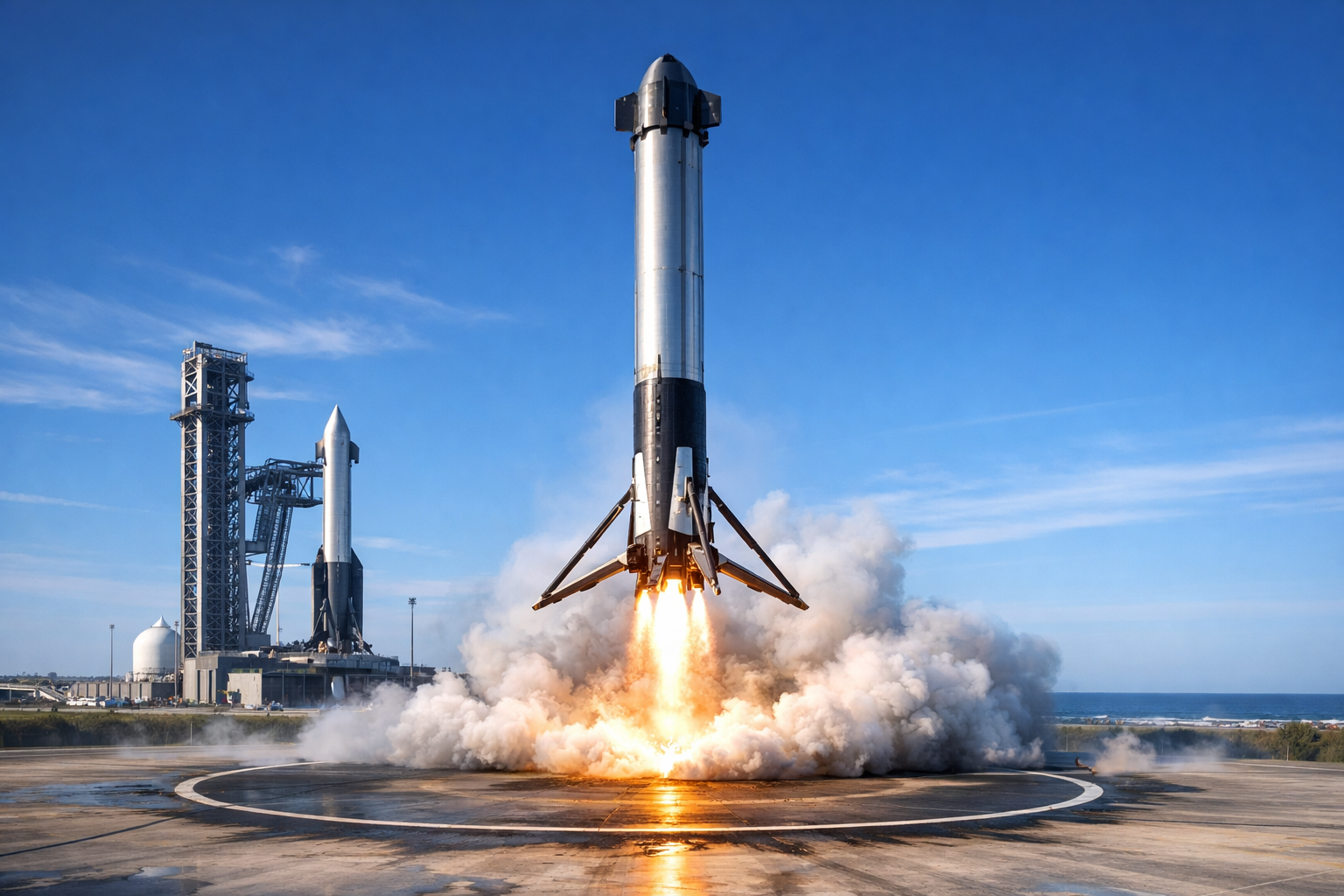
The most striking feature of this new space race is the undeniable dominance of commercial entities. Companies like SpaceX, Blue Origin, and a growing constellation of agile startups are democratizing access to space, fundamentally altering the cost-benefit analysis of orbital and beyond-Earth missions. The advent of reusable rocket technologies has been a game-changer, drastically reducing launch costs and increasing launch frequency. This technological leap has not only made space more accessible but has also fostered a robust ecosystem of satellite manufacturing, in-orbit services, and novel applications that were once deemed economically unfeasible.
Market projections for 2026 underscore this commercial boom. The global space launch services market is projected to attain a staggering US$24.42 billion by 2030, with the commercial space launch market alone expected to nearly quadruple from its 2024 valuation of $8.2 billion. This explosive growth is fueled by an insatiable demand for commercial satellite launches, driven by the proliferation of mega-constellations for global internet coverage, Earth observation, and advanced communication networks. The shift from state monopoly to commercial dominance is complete, with private capital and entrepreneurial spirit now dictating the pace and direction of innovation.
Lunar Ambitions: The Next Frontier for Humanity and Commerce
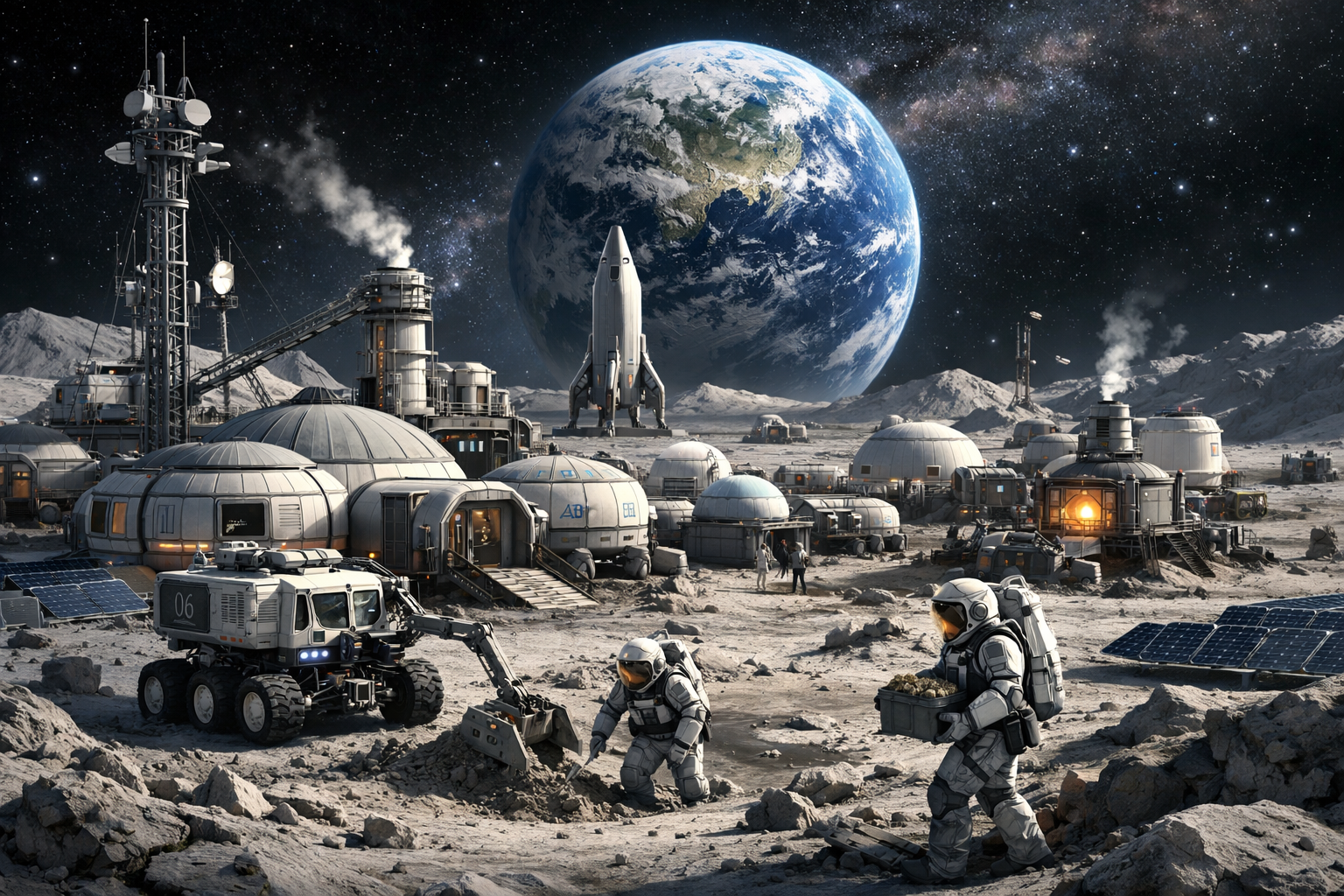
Beyond Earth orbit, the Moon has re-emerged as a primary target, not just for scientific discovery but for strategic commercial and national interests. The Lunar Exploration Technology Market is experiencing rapid expansion, projected to grow from $4.301 billion in 2025 at a Compound Annual Growth Rate (CAGR) of 11%. This growth is indicative of a broader global commitment to establishing a sustainable human presence on the Moon and leveraging its resources.
Nations and private companies alike are pouring resources into developing technologies for lunar surface operations, resource extraction (particularly water ice at the poles), and infrastructure development. The vision extends beyond flags and footprints; it encompasses permanent lunar bases, mining operations, and even space tourism. This renewed focus on the Moon is not merely a nostalgic echo of the Apollo era but a pragmatic step towards deep-space exploration, serving as a proving ground for technologies and strategies that will eventually enable missions to Mars and beyond. The strategic alignment with defense budgets and sovereign interests further solidifies the Moon's importance, transforming it into a critical geopolitical and economic battleground.
Infrastructure in Orbit: The Backbone of the New Space Economy
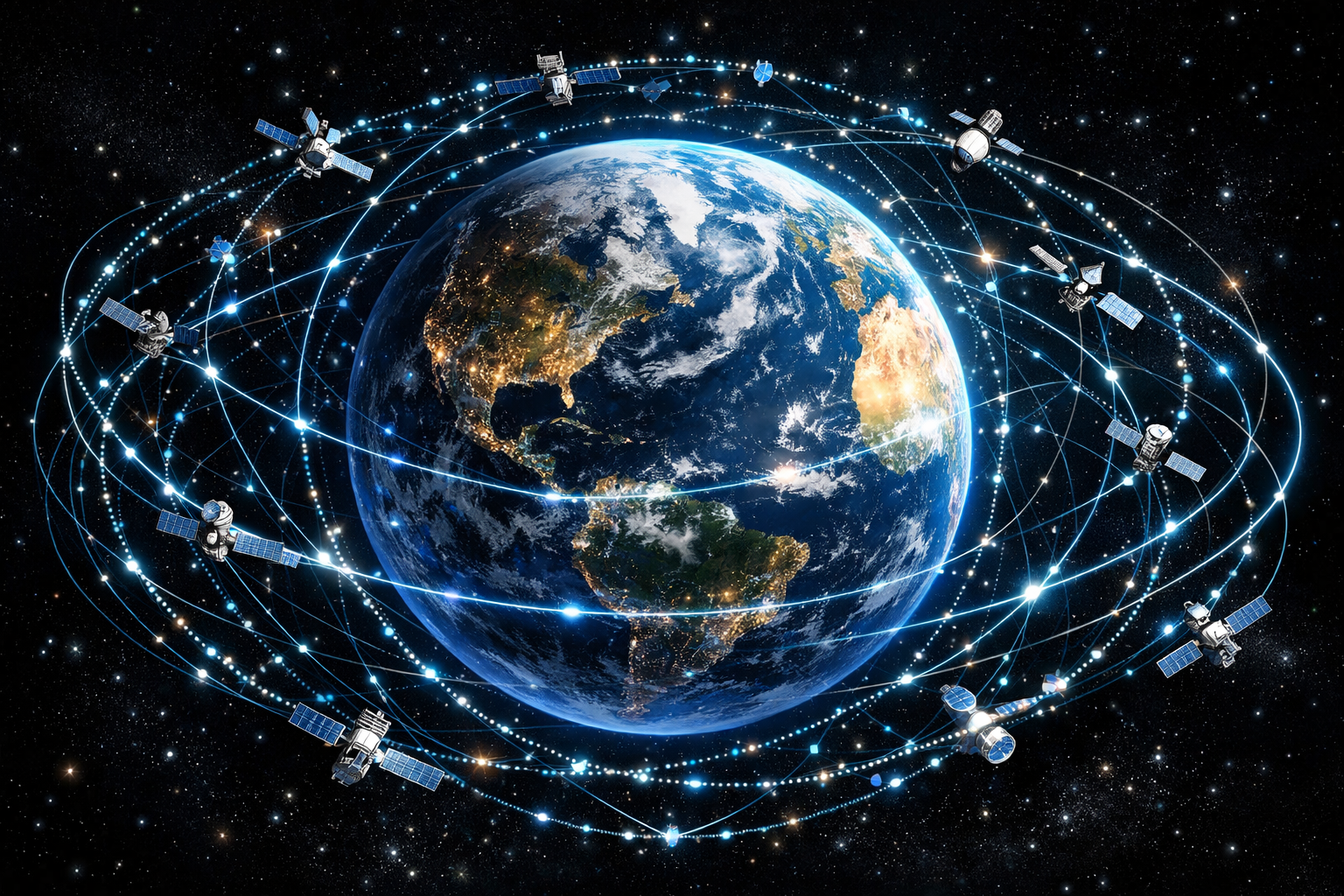
As more satellites are launched and lunar missions become routine, the need for robust in-orbit infrastructure becomes paramount. This includes everything from advanced satellite servicing and refueling capabilities to orbital debris removal and space traffic management systems. The sheer volume of assets in orbit necessitates sophisticated solutions to ensure safety, efficiency, and sustainability. Companies are investing heavily in developing autonomous rendezvous and docking technologies, robotic repair systems, and next-generation propulsion for extended mission lifetimes.
Furthermore, the development of space-based manufacturing and assembly is gaining traction. The ability to construct large structures in orbit, free from the constraints of Earth's gravity and atmospheric drag, opens up possibilities for massive telescopes, power stations, and even habitats. This nascent industry promises to revolutionize how we build and operate in space, further blurring the lines between traditional aerospace and advanced manufacturing.
Geopolitical Realities and the Future of Space Governance

The commercialization of space, while driving innovation, also introduces complex geopolitical considerations. The concept of a "new space race" extends beyond economic competition to strategic national interests, particularly in areas like satellite surveillance, anti-satellite capabilities, and the establishment of norms for lunar and asteroid resource utilization. International cooperation, while still present in projects like the ISS, is increasingly challenged by nationalistic ambitions and the dual-use nature of many space technologies.
The absence of a comprehensive, universally accepted legal framework for space governance creates a complex environment. Treaties like the Outer Space Treaty of 1967 provide a foundational but increasingly outdated framework. Discussions around property rights in space, environmental protection of celestial bodies, and the prevention of space weaponization are becoming more urgent. The decisions made in 2026 and the years immediately following will set precedents for how humanity interacts with and utilizes the vast resources of space for generations to come.
The Human Element: Training and Talent in a New Era
Amidst the technological and geopolitical shifts, the human element remains central. The demand for skilled professionals in aerospace engineering, astrodynamics, robotics, and space law is skyrocketing. Universities and private institutions are rapidly developing new curricula to meet this demand, fostering a new generation of space explorers, entrepreneurs, and policymakers. The allure of space continues to inspire, drawing bright minds into a field that promises both intellectual challenge and the potential for profound impact.
Furthermore, the psychological and physiological challenges of long-duration space travel and lunar habitation are receiving renewed attention. Advances in closed-loop life support systems, radiation shielding, and space medicine are critical for enabling sustained human presence beyond Earth. The insights gained from these endeavors have direct applications for terrestrial challenges, from sustainable living to advanced medical care.
Conclusion: A Future Forged in the Stars
March 2026 finds us at the cusp of a truly transformative era in space exploration and commercialization. The convergence of reusable rocket technology, ambitious lunar programs, and the burgeoning in-orbit infrastructure is not just pushing the boundaries of what is possible but is fundamentally redefining humanity's relationship with space. The commercial sector, once a junior partner, is now a driving force, injecting dynamism and innovation into every facet of space activity.
However, this exciting future is not without its complexities. The need for robust international governance, ethical frameworks for resource utilization, and a sustained commitment to talent development are paramount. As we look to the stars, the challenges are as vast as the opportunities. The decisions and investments made today will determine whether this new space race leads to a future of shared prosperity and scientific advancement or one marked by competition and conflict. One thing is certain: the cosmos beckons, and humanity, in its commercial and exploratory zeal, is answering the call with unprecedented vigor.