The GLP-1 Revolution: How Weight-Loss Drugs Are Reshaping Medicine, Markets, and Society in 2026
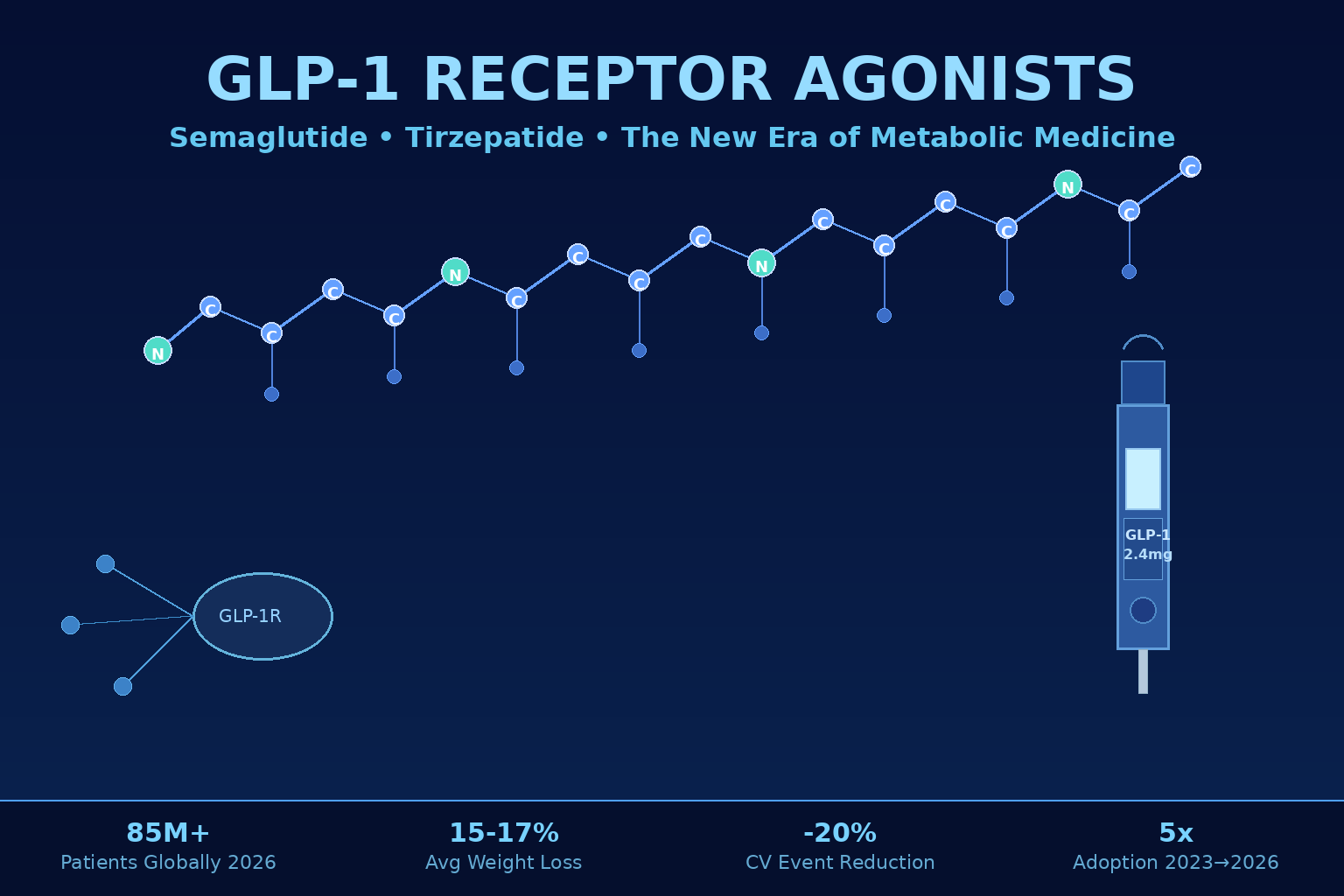
In the long history of medicine, genuine paradigm shifts—moments where a treatment so dramatically outperforms everything that came before it that the field simply reorganizes around it—are remarkably rare. Penicillin was one. Statins were another. The HIV antiretroviral revolution of the mid-1990s was a third. It is too early to write the final chapter, but the evidence accumulating around GLP-1 receptor agonists—the class of drugs that includes semaglutide (Ozempic, Wegovy), tirzepatide (Mounjaro, Zepbound), and a growing cohort of newer entrants—suggests that we may be in the middle of another such moment.
By April 2026, roughly 85 million people worldwide are taking GLP-1 receptor agonists or dual GLP-1/GIP agonists for some combination of diabetes management, weight loss, and cardiovascular risk reduction. That figure represents a more than fivefold increase from 2023 levels. The drugs' manufacturers—primarily Novo Nordisk and Eli Lilly, with a rapidly growing field of challengers—are collectively generating revenues that have placed them among the most valuable pharmaceutical products in history. The healthcare system is straining to accommodate demand that supply chains are only beginning to catch up to. And the implications of these drugs are radiating outward from medicine into economics, culture, and politics in ways that few anticipated when semaglutide was approved for weight management in 2021.
Beyond Weight Loss: The Expanding Therapeutic Frontier
The story of GLP-1 drugs is, at its core, a story about scientific surprises. Semaglutide was developed as a treatment for type 2 diabetes—its weight-loss effects were initially observed as a beneficial side effect rather than a primary target. The STEP clinical trials that established Wegovy's efficacy for obesity treatment in 2021 produced weight losses of 15–17% of body weight, a magnitude that genuinely shocked endocrinologists who had spent careers treating obesity with behavioral interventions that typically achieved a fraction of that effect and diet drugs that were either modestly effective or plagued by safety issues.
But the surprises didn't stop at weight loss. The SELECT trial, whose full results were published in 2023, demonstrated that semaglutide reduced major adverse cardiovascular events—heart attacks, strokes, and cardiovascular death—by 20% in people with obesity and established cardiovascular disease, independent of how much weight they lost. This finding, replicated and extended in subsequent studies, transformed GLP-1s from obesity drugs into cardiovascular drugs—a categorically different regulatory, insurance coverage, and market position.
Since then, the evidence base has continued to expand in directions that range from the expected to the startling.
Kidney disease: The FLOW trial demonstrated that semaglutide reduced the risk of kidney failure progression by 24% in patients with type 2 diabetes and chronic kidney disease. This is significant because diabetic kidney disease is one of the leading causes of dialysis dependence worldwide, and the burden of renal replacement therapy is enormous for health systems and patients alike.
Sleep apnea: A 2024 trial demonstrated that tirzepatide reduced the severity of obstructive sleep apnea—measured by the apnea-hypopnea index—by 63% in non-surgical candidates, compared to 6% for placebo. This is a condition affecting an estimated 1 billion people globally, most of whom are untreated, and for which the primary treatment (CPAP machines) has notoriously poor adherence rates.
Liver disease: Non-alcoholic steatohepatitis (NASH), a progressive fatty liver disease closely linked to obesity and metabolic syndrome, is a condition for which there are almost no approved pharmaceutical treatments. Multiple GLP-1 trials have demonstrated meaningful regression of liver fibrosis, and resmetirom—a related metabolic drug—became the first NASH treatment approved by the FDA in 2024, opening a therapeutic category expected to be worth tens of billions of dollars.
Addiction: The most surprising and scientifically provocative data involves GLP-1s' apparent effects on addictive behavior. Multiple observational studies and a growing body of clinical trial data suggest that GLP-1 receptor agonists significantly reduce alcohol consumption, tobacco use, and in some analyses, cravings for opioids and stimulants in people taking them for diabetes or obesity. The mechanism—GLP-1 receptors are present in the brain's reward circuitry as well as in the gut, and the drugs appear to modulate dopamine signaling in ways that reduce the reward valence of addictive substances—is biologically plausible and is now the subject of intense research focus. If even a fraction of the early signals hold up in rigorous trials, the implications for addiction medicine would be profound.
The Supply, Access, and Equity Crisis
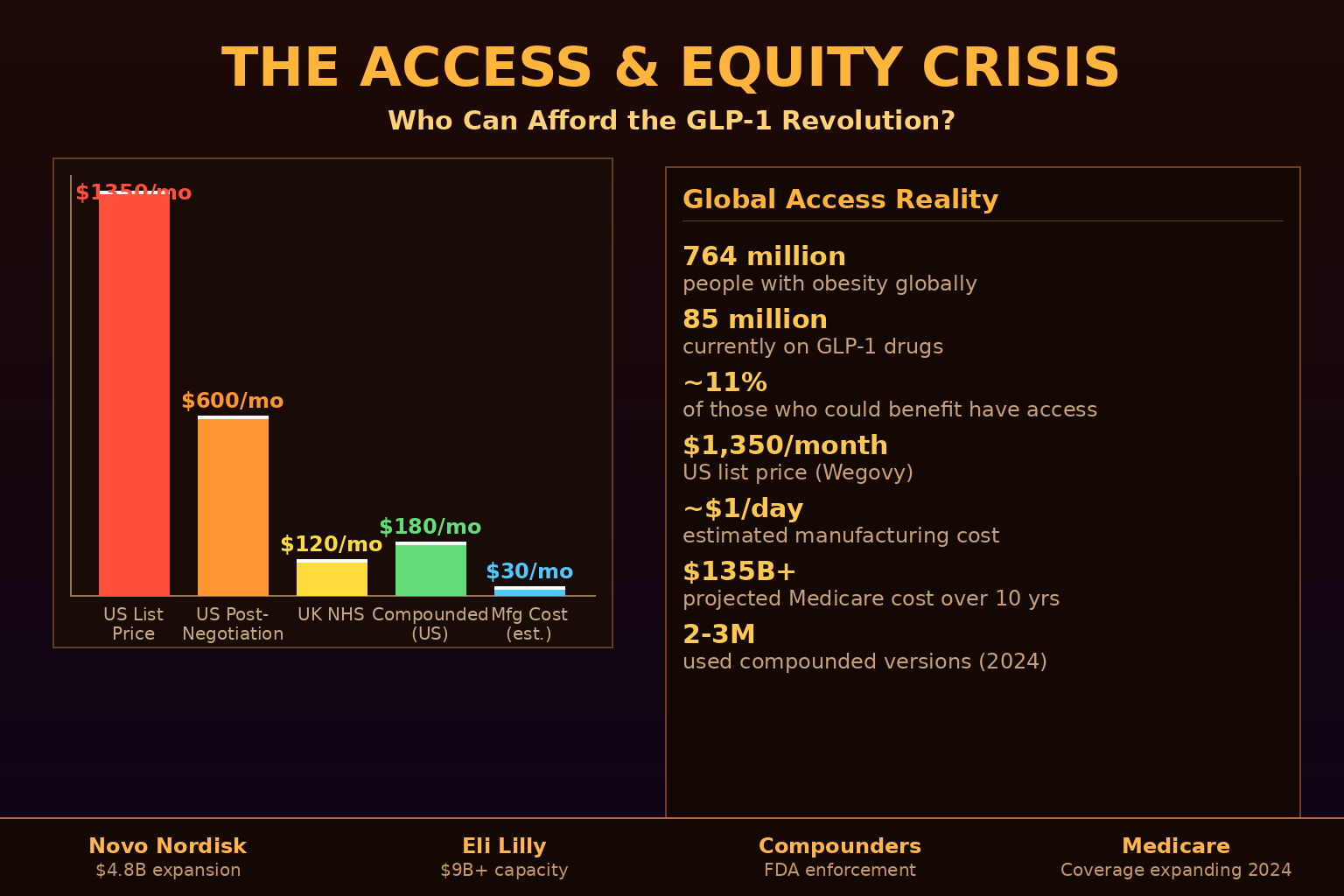
The clinical promise of GLP-1 drugs coexists with a severe and morally uncomfortable access problem. In the United States—the world's largest and most profitable pharmaceutical market—semaglutide (Wegovy) has a list price of approximately $1,350 per month before insurance. Tirzepatide (Zepbound) is priced slightly lower but remains well above $1,000 monthly. Insurance coverage is inconsistent and often requires documented prior treatment failures, physician justifications, and appeals processes that many patients and providers find prohibitively burdensome. Medicare Part D was prohibited from covering weight-loss drugs until legislation passed in late 2024 began phasing in coverage—a change that, when fully implemented, is projected to cost the federal government over $130 billion over a decade.
For the 85 million people currently taking these drugs globally, most are doing so in high-income countries with either insurance coverage, the ability to self-pay, or access to compounded formulations that emerged during the extended supply shortage of 2023–2024. For the estimated 764 million people living with obesity globally—concentrated heavily in middle- and lower-income countries—GLP-1s are essentially inaccessible at current prices. A drug that costs $1 per day in manufacturing cost (approximate estimates from pharmaceutical pricing researchers) and sells for $45 per day in the US is, by any measure, a product whose pricing reflects market power rather than cost.
The supply constraint that characterized 2023–2024 has substantially eased by April 2026. Novo Nordisk has completed a $4.8 billion manufacturing expansion in Denmark and North Carolina. Eli Lilly has invested over $9 billion in manufacturing capacity across facilities in Indiana, North Carolina, and Ireland. Both companies have stated publicly that supply is no longer the primary limiting factor for patient access in the United States, though shortages persist in some international markets.
The politics of GLP-1 pricing have intensified significantly in the US, with the Inflation Reduction Act's Medicare drug price negotiation provisions being applied to semaglutide for the first time in 2026 negotiations. The Biden-era and subsequent administration's drug pricing policies have put Novo Nordisk in direct negotiation with the Centers for Medicare and Medicaid Services—a process that analysts expect will result in a negotiated Medicare price of roughly $500–700 per month, far below the current list price but still far above the manufacturing cost.
The Compounding Question
A significant subplot of the GLP-1 story involves the role of compounding pharmacies. During the supply shortage of 2023–2024, the FDA designated semaglutide and tirzepatide as "in shortage," which legally allowed compounding pharmacies to produce copies of these drugs. By the peak of the shortage period, an estimated 2–3 million Americans were taking compounded GLP-1 medications purchased through telehealth platforms at prices ranging from $100–300 per month—a fraction of the brand-name cost.
When Novo Nordisk and Eli Lilly declared the shortage resolved in late 2024, the FDA issued guidance directing compounders to cease production. The result has been contentious: compounders and their patient advocates argue that compounded products served an essential access function and that patients who were stabilized on them should be able to continue; Novo Nordisk and Eli Lilly argue that unregulated compounded copies introduce safety risks and undermine the intellectual property framework that funds drug development. The legal battles are ongoing, with FDA enforcement actions being challenged in federal court and several states taking independent regulatory positions. The outcome will have lasting implications not just for GLP-1 access but for the broader framework governing pharmaceutical compounding in the US.
Economic and Social Ripple Effects
The scale of GLP-1 adoption is large enough to produce measurable effects that extend well beyond the healthcare system.
Food Industry Disruption
The food and beverage industry is grappling with a consumer population that is, in aggregate, eating less—particularly of the ultra-processed foods that have historically driven revenue. Several major packaged food companies reported volume declines of 3–7% in 2025 attributable at least in part to GLP-1 use, according to their own investor communications and independent analyst research. Restaurant chains serving large-format, high-calorie meals have reported similar patterns.
The strategic responses vary. Some companies are investing in portion-control product lines—single-serve formats and lower-calorie alternatives—targeting GLP-1 users who want to maintain dietary adherence with minimal friction. Others are investigating whether their product formulations can be adjusted to be more compatible with the appetite changes GLP-1 users experience (specifically, the reduced tolerance for highly sweet or fatty foods that many users report). WeightWatchers and Noom, the subscription weight management services, have pivoted their business models to position themselves as GLP-1 companions rather than standalone solutions, offering behavioral coaching and dietary guidance specifically designed for people on medication.
The longer-term effects on the food industry are still being modeled, but analyses from Goldman Sachs Research and Morgan Stanley have projected that if GLP-1 adoption reaches projected levels—an estimated 30+ million US users by 2030 in the higher adoption scenarios—the aggregate caloric consumption of the American population could decline by a measurable percentage, with concentrated effects on snack foods, fast food, and sweetened beverages.
Healthcare System Economics
The economic case for GLP-1 coverage in health insurance is genuinely complex. The drugs are expensive. But obesity is also expensive: the direct healthcare costs attributable to obesity in the United States are estimated at $170–200 billion annually, not counting the indirect costs of lost productivity. If GLP-1s reduce cardiovascular events, kidney failure, sleep apnea, joint replacements, and other obesity-related conditions at the rates clinical data suggests, the long-term cost-benefit calculation may be favorable—but the timing problem is severe, because the drug costs are borne immediately by whoever is providing insurance coverage, while the downstream health savings materialize over decades and may accrue to different payers as patients change insurance plans.
This cost-timing mismatch is one of the central structural challenges in GLP-1 coverage debates. Employers who provide health insurance to working-age adults are covering the drug costs but may not capture the long-term health savings if employees retire onto Medicare or change employers. Medicare captures the long-term cardiovascular and renal savings but is now also paying drug costs under the coverage expansion. The net calculation looks very different depending on which entity's balance sheet you're examining—which explains much of the variation in coverage policies across different payers.
What Comes Next: The Pipeline and the Promise
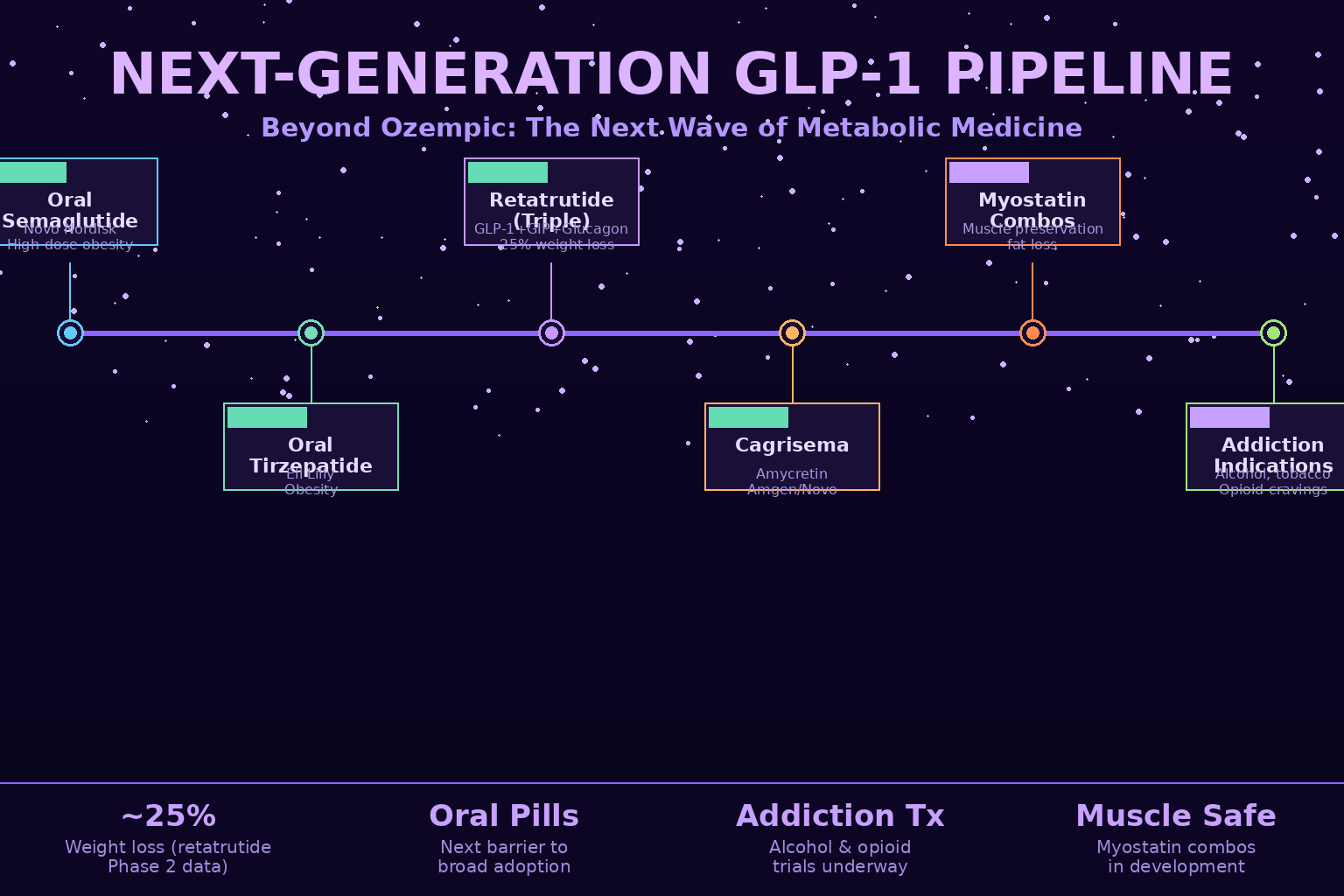
The current GLP-1 landscape is not the endpoint of this therapeutic revolution. The pipeline of next-generation treatments is robust and in several cases represents significant advances over current options.
Oral formulations are coming. Injectable GLP-1s—administered via weekly or monthly subcutaneous injection—are a barrier to adoption for many patients who are uncomfortable with injections or prefer pill-based regimens. Novo Nordisk's oral semaglutide (Rybelsus) is already approved for diabetes at doses up to 14mg, but larger obesity doses face bioavailability challenges. Eli Lilly's oral tirzepatide is in Phase 3 trials. Several biotechs have oral GLP-1 candidates with novel formulation approaches. The first approved high-dose oral GLP-1 for obesity could substantially broaden the potential patient population.
Triple agonists represent the next wave of potency. Current best-in-class agents like tirzepatide work on two receptors (GLP-1 and GIP). Eli Lilly's retatrutide, a triple agonist hitting GLP-1, GIP, and glucagon receptors, demonstrated weight loss of nearly 25% of body weight in Phase 2 trials—approaching the results of bariatric surgery. Phase 3 trials are ongoing, with regulatory submission expected in 2027.
Muscle preservation is a focus of intense development activity. A significant concern with current GLP-1 agents is that the weight they eliminate includes lean muscle mass as well as fat—a problem for elderly patients and for the long-term metabolic health of younger users. Several companies are developing GLP-1 combination regimens with myostatin inhibitors or other anabolic agents designed to preserve or build muscle while driving fat loss. This combination—maximum fat loss with muscle preservation—represents the theoretical ideal for metabolic health and is a major area of competitive investment.
The GLP-1 revolution of 2026 is a story about what happens when biology, chemistry, and clinical evidence align to produce a genuine therapeutic leap—and about the friction between that scientific achievement and the economic, social, and political structures through which healthcare is delivered. The drugs work. The science behind them is expanding in directions that could touch conditions affecting hundreds of millions of people. The challenge is distributing that benefit equitably, sustainably, and in ways that strengthen rather than strain the health systems on which everyone depends.
Medicine does not change this fast very often. When it does, the consequences ripple through every layer of society. We are, by any honest accounting, still in the early chapters of the GLP-1 story.