The Global Water Crisis & Desalination Breakthroughs: A 2026 Perspective
March 2026 finds the world grappling with an intensifying global water crisis, a challenge exacerbated by climate change, rapid urbanization, and geopolitical tensions. Water scarcity is no longer a localized issue but a pervasive threat impacting food security, economic stability, and public health across continents. This month, the vulnerability of critical water infrastructure has been starkly highlighted by recent events, pushing the imperative for innovative solutions like advanced desalination technologies to the forefront of international discourse.
Geopolitical Flashpoints: Water Infrastructure Under Threat

The fragility of global water security was dramatically underscored in early March 2026 with reports of attacks on vital desalination plants in Bahrain and Iran. These incidents, occurring amidst ongoing regional conflicts, serve as a grim reminder that water infrastructure is increasingly becoming a strategic target. The Persian Gulf region, which relies on desalinated water for approximately 40% of its supply, faces an existential threat when these facilities are compromised. Experts warn that a significant disruption in this region could trigger a cascading water crisis across the Middle East and beyond, with severe humanitarian and economic consequences.
These events have intensified calls for greater protection of civilian water resources and the development of more resilient, decentralized water supply systems. The targeting of desalination plants underscores the urgent need for nations to diversify their water sources and invest in technologies that are less susceptible to large-scale attacks or natural disasters.
Desalination Breakthroughs: A Glimmer of Hope
Despite the escalating crisis, technological advancements in desalination offer a significant glimmer of hope. Traditional desalination methods, primarily reverse osmosis, have long been criticized for their high energy consumption and the environmental impact of brine discharge. However, 2026 is witnessing breakthroughs that are transforming the efficiency and sustainability of these processes.
Graphene-Based Filtration: The Next Generation of Membranes

One of the most promising developments is the widespread adoption of graphene-based filtration membranes. Researchers have successfully engineered graphene membranes that are not only significantly more permeable than conventional polymer membranes but also highly selective, allowing water molecules to pass through while effectively blocking salts and impurities. These new membranes are demonstrating up to a 100-fold increase in energy efficiency compared to older technologies, drastically reducing the operational costs and carbon footprint of desalination plants. This breakthrough is making desalinated water a more economically viable option for water-stressed regions globally.
Solar-Powered Desalination: Sustainable Water for Arid Regions
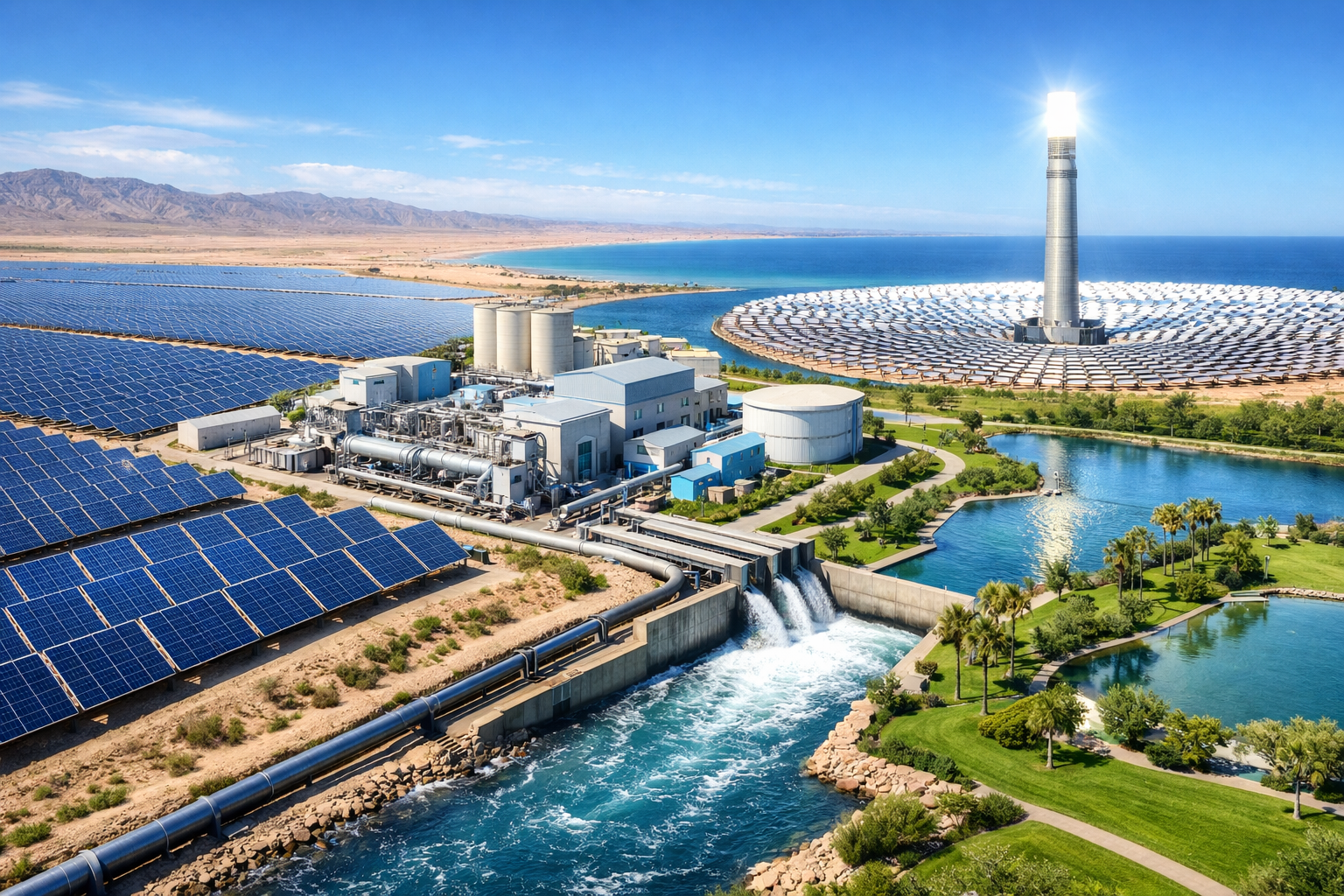
The integration of renewable energy sources with desalination is another critical trend. Large-scale solar-powered desalination plants are becoming increasingly common, particularly in arid, sun-rich regions. These facilities leverage concentrated solar power (CSP) or photovoltaic (PV) arrays to power the energy-intensive reverse osmosis process, effectively decoupling water production from fossil fuel consumption. This not only reduces greenhouse gas emissions but also provides a stable, predictable energy source, enhancing the long-term sustainability of water supply.
Atmospheric Water Generation (AWG): Tapping into the Air

Beyond traditional sources, Atmospheric Water Generation (AWG) technologies are gaining traction as a supplementary water source, especially in remote or extremely arid areas. In 2026, AI-optimized AWG systems are capable of extracting potable water directly from the air, even in regions with relatively low humidity. These systems utilize advanced desiccants and cooling mechanisms, with AI algorithms optimizing their performance based on real-time atmospheric conditions. While not a primary solution for large-scale urban supply, AWG offers a crucial lifeline for off-grid communities and disaster relief efforts, providing decentralized access to clean drinking water.
Decentralized Water Systems: Enhancing Resilience
The vulnerabilities exposed by attacks on large-scale desalination plants have accelerated the shift towards decentralized water systems. Instead of relying on massive, centralized facilities, cities and communities are investing in modular, smaller-scale desalination units and water treatment plants that can be deployed locally. These systems are inherently more resilient, as a failure in one unit does not compromise the entire water supply. They also reduce the energy and infrastructure costs associated with transporting water over long distances.
This trend is complemented by advancements in smart water grids, which use IoT sensors and AI to monitor water quality, detect leaks, and optimize distribution in real-time, minimizing waste and maximizing efficiency across the network.
Policy and Global Cooperation: Water as a Human Right
The UN Water Conference 2026 has placed a renewed emphasis on "Water as a Human Right" and the critical need for international cooperation on cross-border water sharing agreements. The geopolitical implications of water scarcity are driving diplomatic efforts to establish frameworks for equitable resource management and conflict prevention. There is a growing recognition that water security is inextricably linked to global peace and stability, necessitating a collaborative approach to both technological innovation and policy implementation.
Conclusion: A Future Defined by Water Innovation
March 2026 presents a stark reality: the global water crisis is deepening, but so too is humanity's capacity for innovation. The advancements in desalination, atmospheric water generation, and decentralized systems, coupled with a renewed focus on policy and international cooperation, offer a pathway towards a more water-secure future. The challenge now lies in rapidly deploying these solutions at scale and ensuring equitable access, transforming a looming crisis into an opportunity for sustainable development and global resilience.