The Future of Work & AI-Human Collaboration: A 2026 Outlook
March 2026 marks a pivotal moment in the ongoing evolution of work, largely driven by the rapid maturation of Artificial Intelligence (AI). With the recent releases of advanced models like OpenAI's GPT-5.4 and Anthropic's Claude 4.6, the conversation has shifted dramatically from AI as a mere tool to AI as a collaborative agent. This isn't just about automation; it's about a fundamental reshaping of roles, skills, and the very nature of human productivity. The future of work in 2026 is defined by an intricate dance between human ingenuity and AI's computational prowess, demanding new paradigms for collaboration and skill development.
The Rise of Autonomous AI Agents: Beyond Chatbots

One of the most significant developments in early 2026 is the emergence of truly autonomous AI agents. Unlike their predecessors, which primarily functioned as sophisticated chatbots or data processors, these new-generation AIs possess what is being termed "native computer use." This means they can navigate applications, interact with software interfaces, perform web searches, and execute complex multi-step tasks with minimal human intervention. GPT-5.4, for instance, shipped with these capabilities built directly into its Codex system, allowing it to operate across various applications and workflows.
This shift transforms AI from a passive assistant into an active collaborator. Imagine an AI agent capable of managing an entire project lifecycle: from initial research and data analysis to drafting reports, scheduling meetings, and even generating code, all while adhering to specified parameters. This level of autonomy is already impacting industries from software development and marketing to legal and financial services, where AI agents are taking on tasks traditionally performed by entry-level knowledge workers.
Impact on the Workforce: Reskilling and New Roles

The acceleration of AI capabilities has profound implications for the global workforce. Reports indicate that by March 2026, approximately 21% of companies have already reduced or ceased hiring for entry-level positions due to AI's ability to handle routine tasks. Projections suggest this figure could rise to 50% by 2027. This trend, while disruptive, is also a catalyst for the creation of new, higher-value roles.
The demand for skills is rapidly evolving. Instead of focusing on rote tasks, the emphasis is now on "Agent Orchestration" – the ability to design, deploy, and manage AI agents effectively. Professionals who can articulate complex problems, guide AI agents, interpret their outputs, and integrate AI-generated solutions into broader strategies are becoming invaluable. Furthermore, "Human-in-the-loop" oversight roles are critical, ensuring ethical considerations, quality control, and strategic alignment are maintained. This necessitates a massive global reskilling effort, with educational institutions and corporate training programs scrambling to equip the workforce with these new competencies.
AI-Human Collaboration: A Symbiotic Relationship
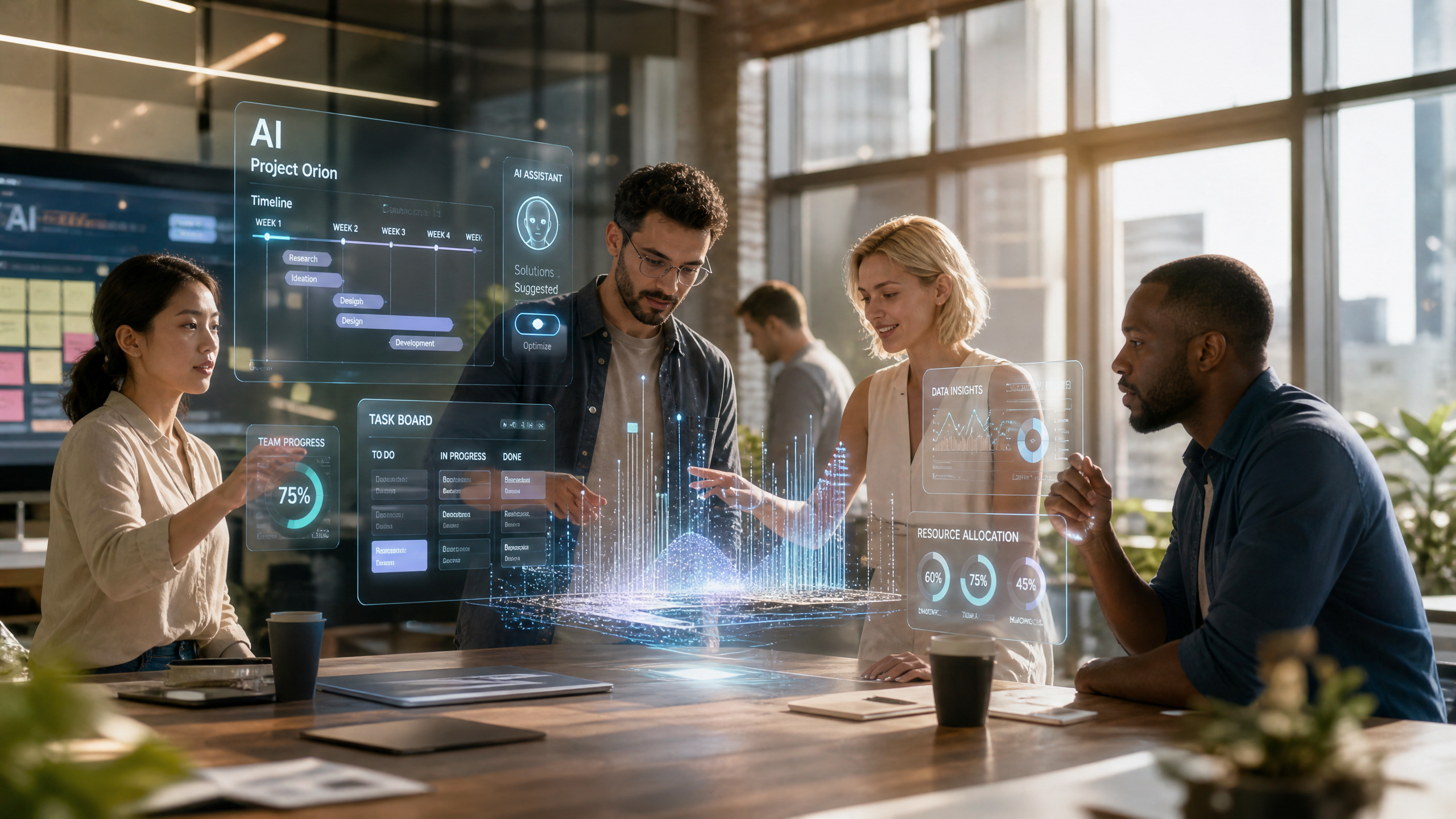
The most successful organizations in 2026 are those that have mastered the art of AI-human collaboration. This isn't a zero-sum game where AI replaces humans; rather, it's a symbiotic relationship where each augments the other's strengths. Humans bring creativity, critical thinking, emotional intelligence, and ethical reasoning – qualities that remain uniquely human. AI brings unparalleled speed, data processing power, and the ability to execute repetitive tasks with flawless precision.
Consider the field of scientific research: AI agents can rapidly analyze millions of research papers, identify patterns, and formulate hypotheses, while human scientists provide the intuition, experimental design, and contextual understanding necessary to validate and expand upon these findings. In creative industries, AI can generate countless iterations of designs or content, freeing human creatives to focus on conceptualization, refinement, and emotional resonance. This collaborative model unlocks unprecedented levels of innovation and efficiency.
Remote Work 2.0: AI-Driven Virtual Offices
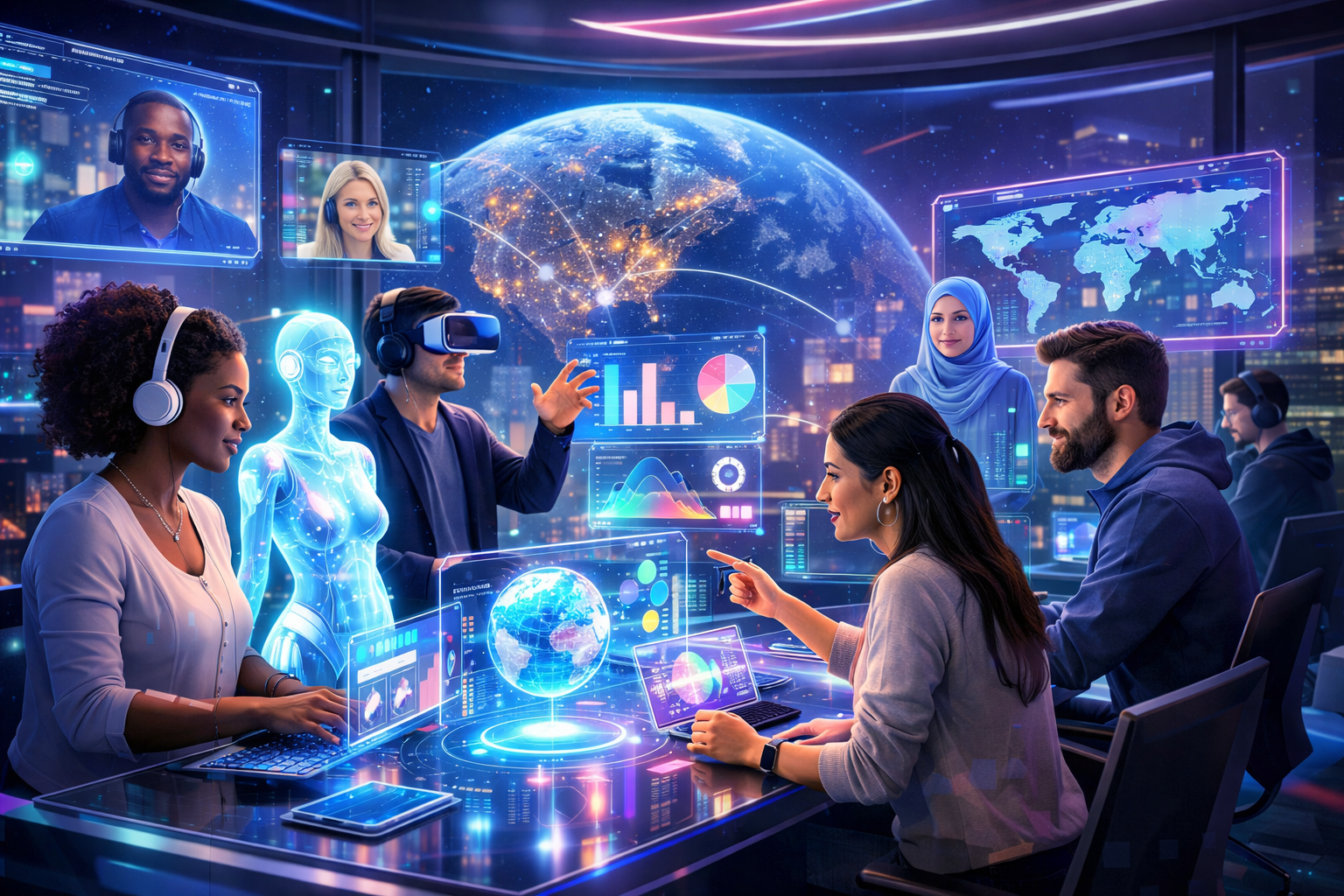
The pandemic-driven shift to remote work has found a new dimension with AI. In 2026, AI-driven virtual offices are becoming increasingly sophisticated. These platforms go beyond simple video conferencing, offering immersive digital environments where AI agents facilitate collaboration, manage workflows, and even provide real-time translation for global teams. This enables seamless cross-border collaboration, breaking down geographical and linguistic barriers.
AI is also enhancing productivity in remote settings by automating administrative tasks, summarizing lengthy meetings, and proactively identifying potential bottlenecks in projects. This allows remote workers to focus more on strategic and creative endeavors, fostering a more engaging and less fragmented work experience. The flexibility and global reach offered by these AI-powered remote work solutions are attracting top talent and redefining organizational structures.
Ethical Considerations and the Future of Employment
As AI continues to integrate deeply into the fabric of work, critical ethical considerations and societal challenges come to the forefront. Questions around job displacement, the potential for algorithmic bias, data privacy, and the psychological impact of working alongside highly autonomous AI agents are paramount. Governments, corporations, and academic institutions are actively engaged in developing policies and frameworks to navigate these complexities.
Universal Basic Income (UBI) and other social safety nets are being rigorously debated and piloted in various regions as potential solutions to mitigate the economic impact of widespread automation. Furthermore, the development of "explainable AI" (XAI) is gaining traction, ensuring that AI's decision-making processes are transparent and auditable, which is crucial for maintaining trust and accountability in collaborative environments. The goal is not just technological advancement, but the creation of a future of work that is equitable, sustainable, and human-centric.
Conclusion: Embracing the Augmented Workforce
March 2026 stands as a testament to a workforce in transition. The era of AI-human collaboration is not a distant future but our present reality. While challenges remain, particularly in ensuring equitable access to new skills and managing the societal impact of automation, the opportunities for innovation, efficiency, and human flourishing are immense. The key lies in embracing this augmented workforce, fostering continuous learning, and designing AI systems that empower rather than diminish human potential. The future of work is not about humans versus AI, but humans with AI, building a more productive and creative world together.