The Green Capital Rush: Climate Tech Investment Hits Record Highs in 2026
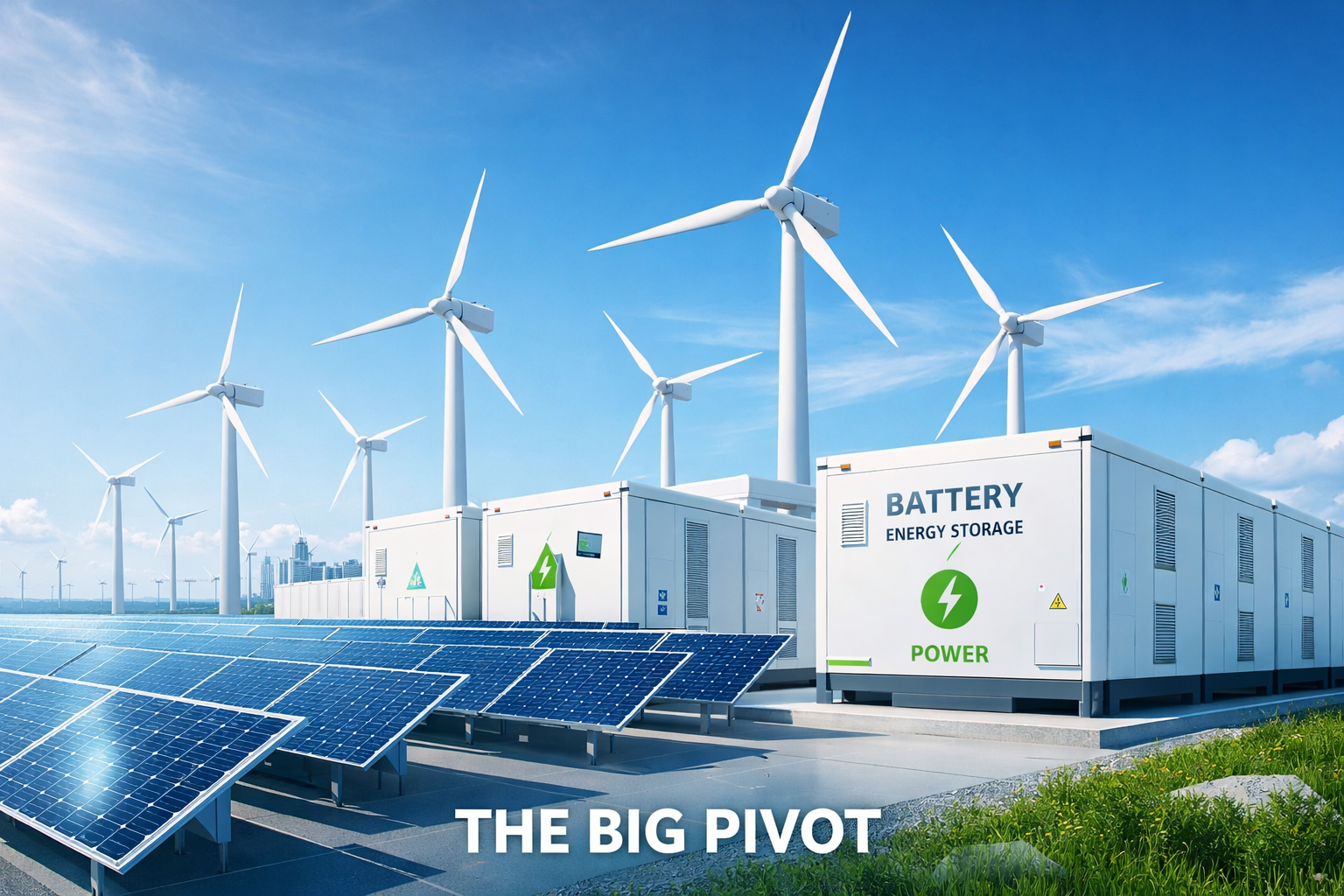
Something remarkable is happening in global capital markets. In the first quarter of 2026, climate technology investment exceeded $120 billion—more than double the equivalent period in 2023. The surge is not a blip driven by a single policy announcement or a handful of mega-deals. It reflects a structural shift in how institutional investors, sovereign wealth funds, and corporate balance sheets think about the energy transition: not as a cost to be managed, but as the largest wealth-creation opportunity of the next two decades.
The Numbers Tell a Story
BloombergNEF's latest analysis places cumulative global climate tech investment since 2020 at over $1.8 trillion. The money is flowing across a diverse portfolio of technologies and geographies. Clean energy—primarily solar, wind, and battery storage—continues to command the largest share, but the composition of investment has broadened dramatically.
Green hydrogen is attracting substantial capital as electrolyzer costs fall toward long-projected targets. Carbon capture, utilization, and storage (CCUS) has moved from a theoretical fix to a category with real commercial projects, driven partly by the Inflation Reduction Act's 45Q tax credits and partly by hard-to-abate industrial sectors running out of alternative decarbonization options. Sustainable agriculture and food technology, long undercapitalized relative to their emissions footprint, saw investment triple between 2023 and 2025. The built environment—retrofit finance, heat pumps, smart building management—is finally attracting capital commensurate with its 40% share of global emissions.
Policy Tailwinds: More Durable Than the Critics Predicted
When the US Inflation Reduction Act passed in 2022, skeptics predicted that a future administration would gut its clean energy provisions. That didn't happen. The manufacturing investment catalyzed by IRA incentives—semiconductor fabs, battery gigafactories, electrolyzer plants—proved politically durable because it created jobs in swing states. By 2026, the political economy of clean energy in the US has shifted: the industry employs too many workers in too many congressional districts to be easily unwound.
Europe's Green Deal Industrial Plan and the associated Net-Zero Industry Act have similarly anchored clean energy investment across the continent. The regulatory certainty that investors crave—stable carbon pricing, clear permitting pathways, long-term contracts—is more available in 2026 than at any previous point.
Emerging economies are also generating significant policy momentum. India's Production Linked Incentive scheme for solar manufacturing has attracted over $9 billion in committed investment. Brazil's auction system for offshore wind has generated competitive pricing that matches Europe's most mature markets. The just-transition financing mechanisms embedded in the COP30 outcome document (negotiated in Belém in late 2025) are beginning to unlock capital for climate solutions in nations that have historically been left behind.
Technology Maturation: The Cost Curves That Changed Everything
No single factor has done more to accelerate climate tech investment than the relentless decline in clean energy costs. The story of solar photovoltaic costs—down 90% over the past decade—is well known. Less heralded but equally significant are the cost trajectories for battery storage and heat pumps.
Lithium-ion battery pack prices fell below $75/kWh in 2025, a threshold that makes electric vehicles cost-competitive with internal combustion on a total-cost-of-ownership basis without subsidies in most major markets. The implications ripple outward: cheaper batteries accelerate grid storage deployment, which in turn enables higher penetrations of variable renewable energy, which reduces the cost of the clean grid that everything else connects to.
Heat pump adoption has been transformed by a combination of falling equipment costs, rising fossil fuel prices (particularly in Europe after the 2022 energy crisis), and improving cold-climate performance. Heat pumps now outsell gas boilers in several European markets. The building decarbonization opportunity—worth an estimated $3.5 trillion globally through 2030—is starting to attract the capital it deserves.
The New Climate Tech Investors
The investor base for climate tech has changed as dramatically as the technology. A decade ago, clean energy was primarily funded by specialized impact investors, development finance institutions, and government grants. Today, the largest pools of capital are engaged.
BlackRock's climate infrastructure fund has reached $30 billion in assets under management. Sovereign wealth funds from Norway, Singapore, and Abu Dhabi have established dedicated climate tech allocation sleeves. Large pension funds in Canada, the Netherlands, and Australia have made explicit commitments to align their portfolios with 1.5°C pathways—a commitment that requires, among other things, significant positive exposure to climate solutions.
Corporate venture capital has also surged. Oil and gas majors—initially reluctant and often cynical—have made substantial investments in areas adjacent to their existing businesses: hydrogen, carbon capture, biofuels. Some of this is greenwashing; much of it reflects genuine strategic repositioning as executives contemplate what their business looks like in a net-zero world. The interesting question is whether these investments will remain sidelined experiments or be integrated into core business strategy.
The Financing Gap and How to Close It
For all the capital flowing into climate tech, a substantial gap remains—particularly for projects in the Global South and for technologies at the difficult commercialization stage between demonstration and first-of-a-kind commercial deployment.
The "valley of death" between a proven technology and a bankable commercial project is a persistent problem for climate innovation. Debt markets are conservative; project finance lenders want proven technologies and long operating histories. First-of-a-kind CCUS, advanced geothermal, and green hydrogen projects all struggle to clear this hurdle. Blended finance mechanisms—where public or philanthropic capital absorbs first-loss risk to crowd in private investment—are increasingly seen as the key tool for bridging the gap.
Climate finance for developing nations has improved since the COP29 commitment in 2024 to provide $300 billion annually from public sources, but it remains dramatically below the $1.3 trillion that the UN estimates is needed. Closing this gap will require not just more money but better instruments: local-currency financing, credit guarantees, and insurance mechanisms that reduce the risk premium investors attach to emerging market climate projects.
What Distinguishes the Winners
Not all climate tech investments will succeed. The sector is experiencing the classic dynamics of any technology gold rush: genuine opportunities alongside overcapitalized subsectors, underdifferentiated business models, and founders whose pitch decks outpace their technical credibility.
The companies attracting the most sophisticated capital share several characteristics. They have defensible technology advantages—not just better execution on commodity technologies, but proprietary processes, materials, or approaches that are difficult to replicate. They operate in markets with clear, near-term demand rather than speculative future demand. They have cost trajectories that lead to economic viability without indefinite subsidy support. And they are led by teams that understand both the technical complexity of what they're building and the commercial complexity of selling into incumbent energy, industrial, and food systems.
The energy transition is the industrial opportunity of the century. The capital is arriving. The question now is whether it will be deployed wisely enough to make the transition happen at the speed and scale the climate requires.