The Circular Economy & Sustainable Tech Manufacturing: A Paradigm Shift for a Greener Future

Introduction
In an era defined by rapid technological advancement and increasing environmental concerns, the traditional linear model of "take-make-dispose" is proving unsustainable. The tech industry, a significant consumer of resources and energy, is at a critical juncture. The concept of the circular economy offers a transformative solution, advocating for a systemic shift where products, components, and materials are kept at their highest utility and value at all times. This article explores the growing importance of the circular economy in sustainable tech manufacturing, its benefits, challenges, and the path forward for a greener, more resilient future.
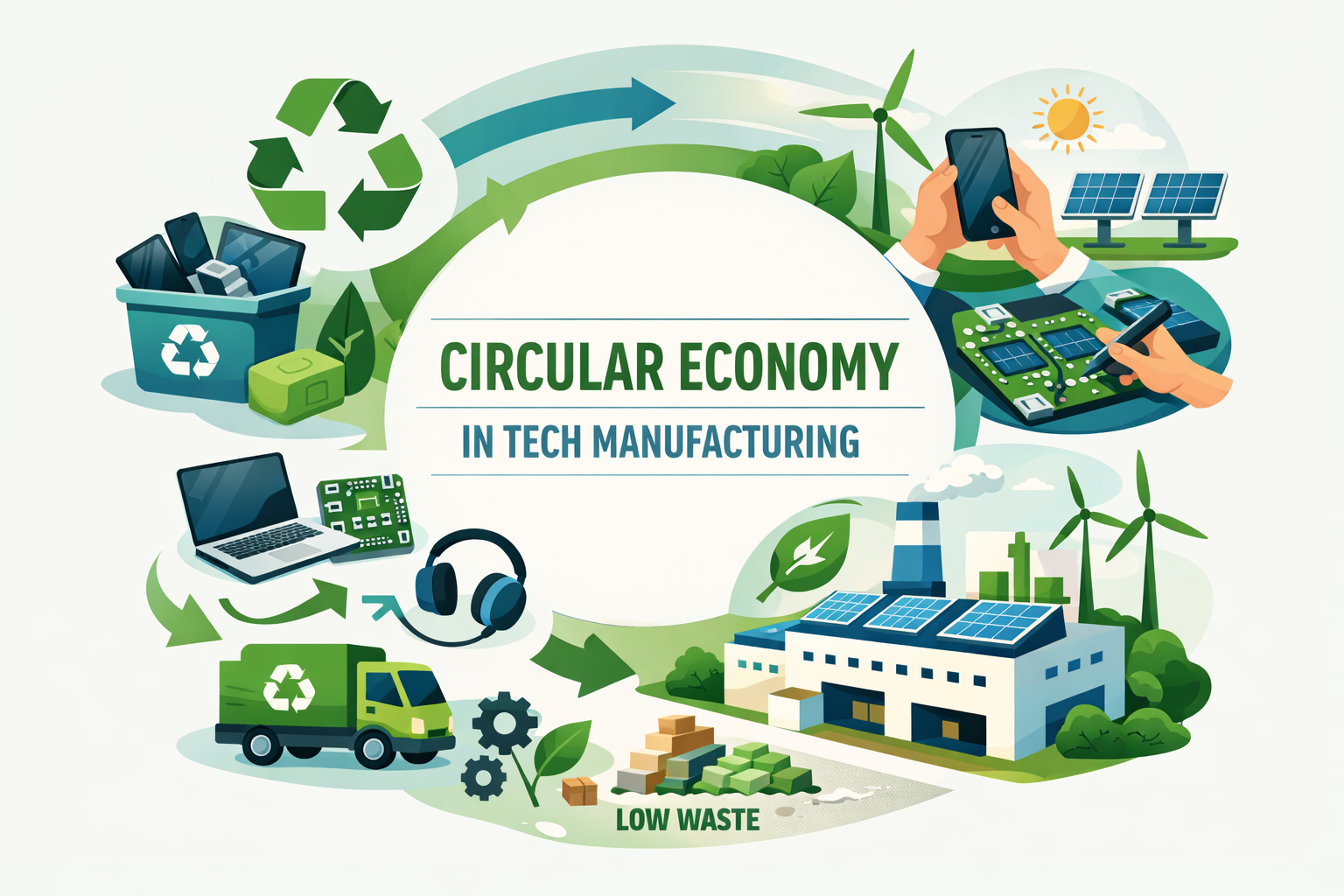
Understanding the Circular Economy in Tech
Unlike the linear model, a circular economy in tech manufacturing focuses on three core principles:
- Design out waste and pollution: This involves creating products that are durable, repairable, upgradeable, and recyclable from the outset. It means selecting materials that are safe, renewable, or recycled, and avoiding hazardous substances.
- Keep products and materials in use: Extending the lifespan of devices through repair, refurbishment, remanufacturing, and reuse. When products reach their end-of-life, their components and materials are recovered and cycled back into the economy.
- Regenerate natural systems: Moving away from finite resource extraction towards processes that replenish and restore natural capital. This includes using renewable energy, minimizing water consumption, and reducing greenhouse gas emissions throughout the manufacturing process.
For the tech sector, this translates into designing modular smartphones, laptops, and other electronics, developing robust repair ecosystems, and establishing efficient collection and recycling programs for e-waste. It also means innovating in material science to find sustainable alternatives to rare earth elements and other critical resources.
Why the Shift to Circularity is Crucial for Tech
The urgency for the tech industry to embrace circularity stems from several critical factors:
- Resource Scarcity: The production of electronic devices relies heavily on finite resources like gold, silver, copper, palladium, and rare earth elements. As demand for these materials grows, their availability dwindles, leading to price volatility and geopolitical risks.
- Environmental Impact: The manufacturing process is energy-intensive and often involves toxic chemicals, contributing to pollution and carbon emissions. E-waste is a rapidly growing problem, with millions of tons of discarded electronics ending up in landfills annually, leaching harmful substances into the environment.
- Consumer Demand and Regulation: Consumers are increasingly conscious of the environmental footprint of their purchases and are demanding more sustainable products. Governments worldwide are also introducing stricter regulations on product design, extended producer responsibility, and waste management, pushing companies towards more circular practices.
- Economic Opportunity: The circular economy presents significant economic opportunities. It can unlock new revenue streams through repair and recycling services, reduce material costs, enhance brand reputation, and create new jobs in green industries.
Key Pillars of Sustainable Tech Manufacturing
Achieving a truly circular tech industry requires concerted effort across several key areas:
- Eco-Design and Longevity: Designing products for durability, repairability, and upgradability. This includes using standardized components, making spare parts readily available, and providing clear repair instructions. Companies like Fairphone are pioneers in this space, offering modular smartphones designed for easy repair and component replacement.
- Sustainable Materials: Prioritizing the use of recycled, renewable, and non-toxic materials. Research into bio-based plastics, recycled metals, and alternative conductive materials is crucial. This also involves improving material traceability and supply chain transparency.
- Reverse Logistics and Recycling: Establishing efficient systems for collecting, sorting, and processing end-of-life electronics. Advanced recycling technologies are needed to recover valuable materials with high purity and efficiency, minimizing loss and environmental impact.
- Product-as-a-Service (PaaS) Models: Shifting from selling products to offering them as services. This incentivizes manufacturers to design for longevity and repair, as they retain ownership of the product throughout its lifecycle. Examples include leasing IT equipment or subscription models for electronics.
- Digitalization and AI: Leveraging technologies like AI, blockchain, and digital twins to optimize circular processes. AI can improve material sorting in recycling facilities, predict product lifespan for proactive maintenance, and match supply and demand for secondary materials. Blockchain can enhance transparency and traceability in supply chains.
Challenges and the Road Ahead
The transition to a circular economy in tech manufacturing is not without its challenges. These include:
- Complexity of Supply Chains: Global tech supply chains are incredibly complex, making it difficult to track materials and implement circular practices across all stages.
- Economic Viability: The initial investment in new design processes, reverse logistics infrastructure, and advanced recycling technologies can be substantial.
- Consumer Behavior: Shifting consumer mindsets from ownership to access, and encouraging repair over replacement, requires significant behavioral change.
- Lack of Standardization: A lack of common standards for eco-design, material labeling, and recycling processes can hinder interoperability and scalability.
Despite these hurdles, the momentum towards circularity is undeniable. Collaborative efforts between industry, governments, academia, and consumers are essential. Policy frameworks that incentivize circular design, support repair rights, and fund recycling infrastructure will play a crucial role. Innovation in materials science and manufacturing processes, coupled with consumer education, will pave the way for a truly sustainable tech industry.
Conclusion
The circular economy offers a compelling vision for the future of tech manufacturing – one where economic prosperity is decoupled from resource depletion and environmental degradation. By embracing principles of eco-design, longevity, sustainable materials, and efficient resource recovery, the tech industry can transform itself into a powerful force for good. This paradigm shift is not merely an environmental imperative; it is an economic opportunity and a moral responsibility to build a more resilient, equitable, and sustainable future for all.