Green Hydrogen: Powering the 2026 Energy Revolution
As of June 25, 2026, the global energy landscape is undergoing a profound transformation, with green hydrogen emerging as a pivotal force in the quest for a sustainable future. This clean energy carrier, produced by electrolyzing water using renewable electricity, is no longer a distant dream but a rapidly materializing reality, poised to decarbonize hard-to-abate sectors and reshape industrial processes worldwide. The urgency of climate change and the increasing volatility of fossil fuel markets have accelerated investments and technological advancements, positioning green hydrogen at the forefront of the 2026 energy revolution.
The Promise of Green Hydrogen: Decarbonizing Industry and Transport
The appeal of green hydrogen lies in its versatility and zero-emission profile. Unlike traditional hydrogen production methods that rely on fossil fuels, green hydrogen offers a truly sustainable alternative. It can be used as a clean fuel for heavy-duty transport, aviation, and shipping, where electrification remains challenging. Furthermore, it serves as a crucial feedstock for industries such as steel, cement, and chemicals, which are significant contributors to global carbon emissions. By replacing fossil fuels in these sectors, green hydrogen has the potential to drastically reduce industrial carbon footprints.
In 2026, we are witnessing a surge in large-scale green hydrogen projects across continents. Governments and private enterprises are pouring billions into developing gigawatt-scale electrolyzer plants, expanding renewable energy infrastructure, and establishing robust supply chains. This concerted effort is driven by ambitious decarbonization targets and the recognition that green hydrogen is indispensable for achieving net-zero emissions by mid-century.
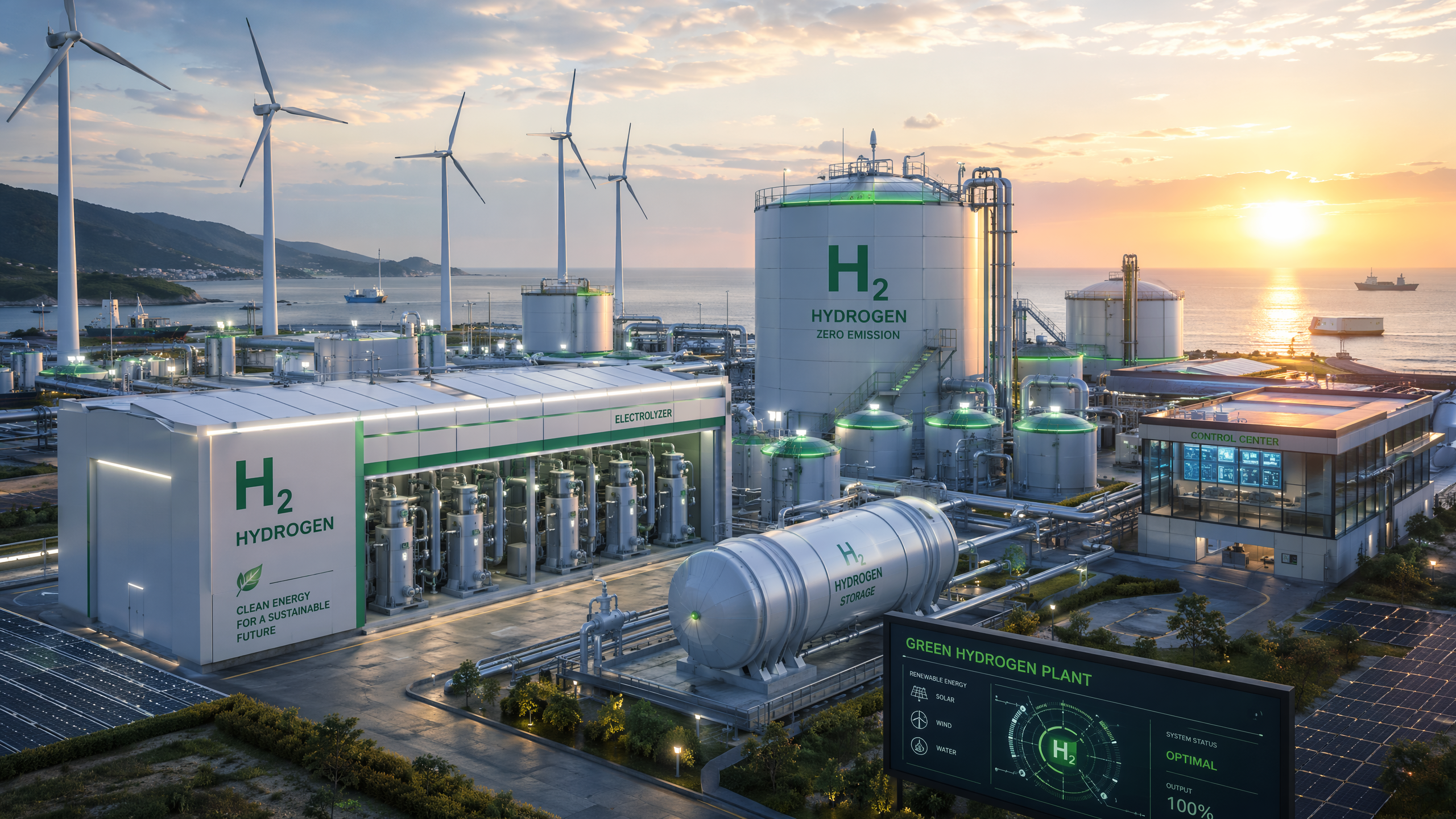 A conceptual image of a large-scale green hydrogen production facility, illustrating the industrial commitment to sustainable energy solutions.
Technological Advancements and Cost Reduction
One of the most significant drivers behind the current green hydrogen boom is the rapid advancement in electrolyzer technology and the corresponding reduction in production costs. Innovations in alkaline, PEM (Proton Exchange Membrane), and SOEC (Solid Oxide Electrolysis Cell) technologies are making hydrogen production more efficient and economically viable. Coupled with the decreasing cost of renewable electricity from solar and wind, the levelized cost of green hydrogen is becoming increasingly competitive with fossil fuel-derived hydrogen.
Furthermore, research and development efforts are focused on improving hydrogen storage and transportation solutions. New materials for solid-state hydrogen storage, advanced liquefaction techniques, and the repurposing of existing natural gas pipelines for hydrogen blending are all contributing to the feasibility of a hydrogen-based economy. These technological breakthroughs are critical for scaling up green hydrogen production and ensuring its widespread adoption across various applications.
Global Collaboration and Policy Support
The year 2026 is also marked by unprecedented global collaboration and strong policy support for green hydrogen. International partnerships are being forged to facilitate cross-border trade of green hydrogen and its derivatives, such as green ammonia and methanol. Countries with abundant renewable energy resources are positioning themselves as future exporters of green hydrogen, creating new economic opportunities and fostering energy independence.
Policy frameworks, including subsidies, tax incentives, and carbon pricing mechanisms, are playing a crucial role in de-risking investments and accelerating market development. Many nations have introduced national hydrogen strategies, outlining clear roadmaps for production, infrastructure development, and end-use applications. These policies provide the necessary regulatory certainty and financial impetus for industries to transition towards green hydrogen.
The Interconnected Global Energy Grid of Tomorrow
The rise of green hydrogen is intrinsically linked to the evolution of a more integrated and resilient global energy grid. As renewable energy sources become dominant, the need for efficient energy storage and transmission solutions grows. Green hydrogen acts as a flexible energy vector, capable of storing excess renewable electricity and transporting it over long distances, thereby balancing the grid and enhancing energy security. This synergy between renewable electricity and green hydrogen is foundational to the future of a truly sustainable and interconnected global energy system.
Smart grid technologies, powered by advanced analytics and digital platforms, are optimizing the integration of diverse energy sources, including green hydrogen production facilities. These intelligent grids can manage fluctuating renewable energy supply, ensuring a stable and reliable power delivery. The vision for 2026 and beyond is a world where energy is clean, abundant, and seamlessly distributed across borders, driven by innovations like green hydrogen.
 An intricate visualization of a global smart energy grid, illustrating the interconnectedness of renewable energy sources and advanced energy management systems.
Challenges and the Path Forward
Despite the immense potential, the green hydrogen revolution faces challenges, including the need for further cost reductions, the development of extensive infrastructure, and overcoming regulatory hurdles. However, the momentum is undeniable. The concerted efforts of researchers, engineers, policymakers, and investors are steadily addressing these obstacles, paving the way for a hydrogen-powered future.
In conclusion, June 25, 2026, finds green hydrogen at a critical juncture, poised to redefine our energy future. Its ability to decarbonize heavy industries, fuel transportation, and integrate seamlessly with renewable energy grids makes it an indispensable component of the global energy transition. As investments continue to flow and technologies mature, green hydrogen is set to play a transformative role in achieving a cleaner, more sustainable, and energy-secure world.