Alphabet’s $80 Billion Gambit: Fueling the Next Frontier of AI Infrastructure
June 22, 2026 – In a move that signals the beginning of a new era in the global technology race, Alphabet Inc., the parent company of Google, has officially launched an unprecedented $80 billion capital raise. This massive financial injection, announced earlier this month and reaching a critical milestone today, June 22, 2026, is dedicated exclusively to the build-out of next-generation AI infrastructure. The move underscores the staggering costs of remaining competitive in the age of artificial intelligence and marks a definitive shift in how the world’s most valuable companies manage their capital.
The Infrastructure Bottleneck: Why $80 Billion?
For the past two years, the primary constraint on AI advancement has not been algorithmic, but physical. The demand for specialized compute power—specifically high-bandwidth memory and advanced tensor processing units (TPUs)—has far outstripped global supply. Alphabet’s decision to raise $80 billion is a direct response to this "infrastructure bottleneck."
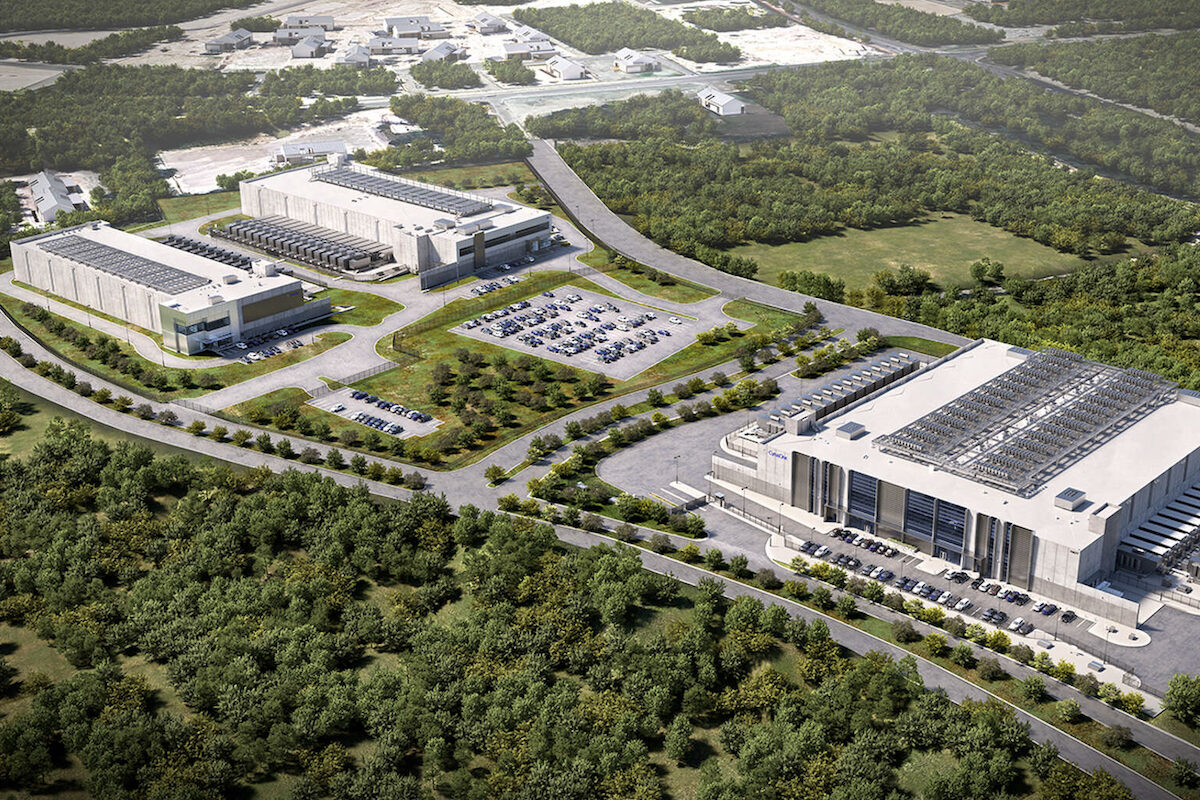
The capital will be deployed across three primary areas: the construction of "Hyper-Scale" AI data centers, the development of proprietary custom silicon, and the securing of long-term energy contracts to power these massive installations. Alphabet CEO Sundar Pichai noted in a recent briefing that the goal is to create a "seamless global neural fabric" capable of supporting the next generation of multi-agent systems and autonomous AI entities.
Berkshire Hathaway and the Institutional Endorsement
A significant portion of the capital raise—approximately $10 billion—has been anchored by Warren Buffett’s Berkshire Hathaway. This investment is particularly noteworthy as it represents a major endorsement of Alphabet’s long-term AI strategy by one of the world’s most conservative and respected institutional investors. Analysts suggest that Berkshire’s involvement has provided a "halo effect," encouraging a broad spectrum of pension funds and sovereign wealth funds to participate in the stock sale.
The stock sale itself is being executed through a series of tranches, with the final and largest portion hitting the market today. Despite the massive increase in share supply, Alphabet’s stock has remained remarkably resilient, as investors prioritize the company’s future dominance in the AI-native economy over short-term dilution concerns.
The Geopolitical Dimension of AI Compute
Alphabet’s move is not occurring in a vacuum. It is part of a broader "Compute Arms Race" that has become a central pillar of 21st-century geopolitics. Nations are increasingly viewing AI infrastructure as a strategic asset, akin to oil reserves or telecommunications networks. By securing $80 billion in private capital, Alphabet is effectively building a private-sector equivalent to national strategic infrastructure.
This has raised questions about the concentration of power in the hands of a few tech giants. Regulators in both the U.S. and the EU are closely monitoring the build-out, with some calling for "Open Compute" standards to ensure that smaller startups can still access the massive processing power required to train and deploy advanced models. Alphabet has responded by pledging to open a portion of its new infrastructure to academic and non-profit researchers through its "AI for Good" initiative.

Looking Ahead: The 2027 Horizon
The impact of this $80 billion investment will not be felt overnight. The construction of the planned data centers and the fabrication of new custom silicon will take place over the next 18 to 24 months. However, the signal sent to the market today is clear: the era of "lean" AI is over. The future belongs to those who can master the physical layer of the digital world.
As we move into the second half of 2026, the focus will shift from capital raising to execution. If Alphabet can successfully translate this $80 billion into a tangible compute advantage, it may secure its position as the foundational platform for the AI-driven global economy for decades to come.