The Rise of Multiagent Systems: Orchestrating the Next Wave of AI
The year 2026 marks a significant turning point in the evolution of artificial intelligence. While the previous years were dominated by the emergence of increasingly large and capable foundation models, the current frontier is defined by Multiagent Systems (MAS). This paradigm shift moves away from a single, monolithic AI attempting to do everything, toward a decentralized ecosystem of specialized agents that collaborate, communicate, and compete to solve complex tasks.
From Chatbots to Collaborative Agents
The transition to multiagent systems is driven by the realization that complex real-world problems often require a diverse set of skills and perspectives. Just as a successful corporation relies on different departments—marketing, engineering, finance—to function, modern AI applications are increasingly being built as "societies" of agents. Each agent within a MAS can be optimized for a specific domain, such as data retrieval, code generation, or logical reasoning.
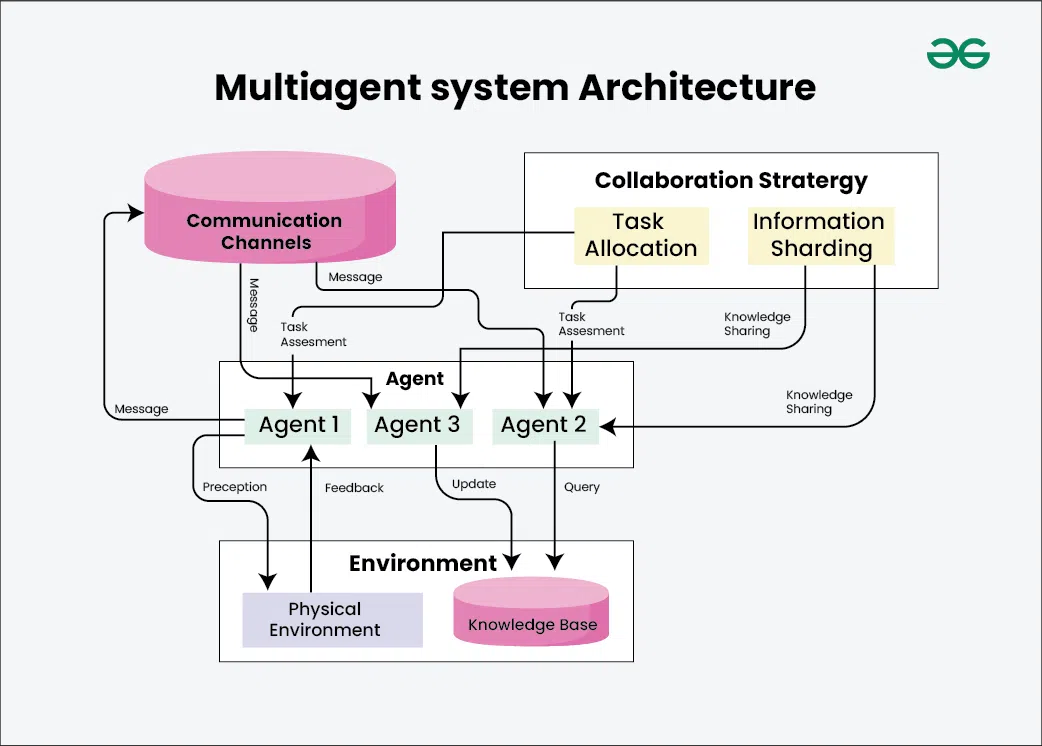 A typical MAS architecture involves communication channels, task allocation, and information sharing among specialized agents.
This collaborative approach allows for greater flexibility and scalability. Instead of retraining a massive model to handle a new task, developers can simply introduce a new specialized agent into the existing system. These agents can then use standardized protocols to interact with their peers, sharing context and refining their outputs through iterative feedback loops.
Enterprise Automation and Agentic Workflows
In the corporate world, MAS is revolutionizing how business processes are managed. "Agentic workflows" are replacing traditional linear automation. In these workflows, a supervisor agent might receive a high-level goal from a human user, break it down into sub-tasks, and delegate those tasks to a team of subordinate agents.
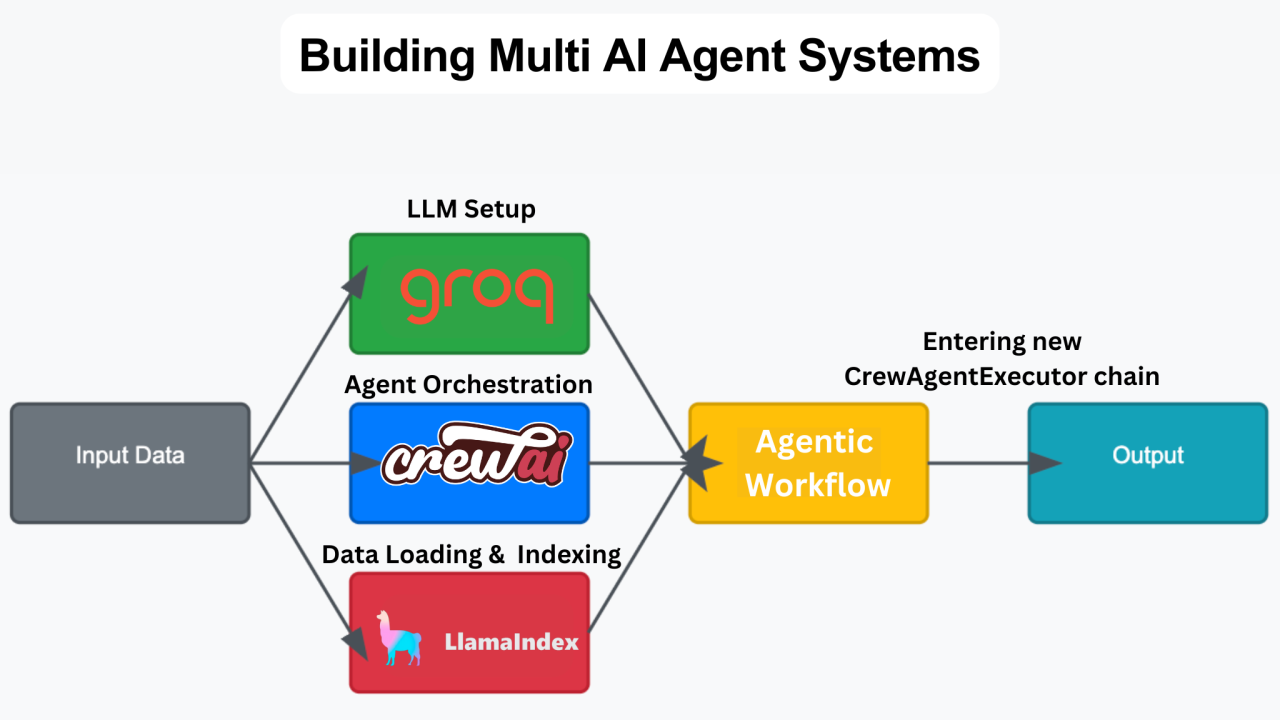 Frameworks like CrewAI and AutoGen are enabling developers to build complex agentic workflows with ease.
For example, in a supply chain management scenario, one agent might monitor inventory levels, another might analyze market trends to predict demand, and a third might negotiate with suppliers' AI agents to secure the best prices. This level of autonomous coordination reduces the need for human intervention in routine decisions, allowing teams to focus on high-level strategy and creative problem-solving.
Single vs. Multi-Agent Systems: The Competitive Edge
The advantages of MAS over single-agent systems are becoming increasingly clear. Single-agent systems, while powerful, often suffer from "context drift" or hallucinations when tasked with long, multi-step processes. Multiagent systems mitigate these issues by introducing checks and balances. One agent's output can be verified or critiqued by another, leading to higher accuracy and reliability.
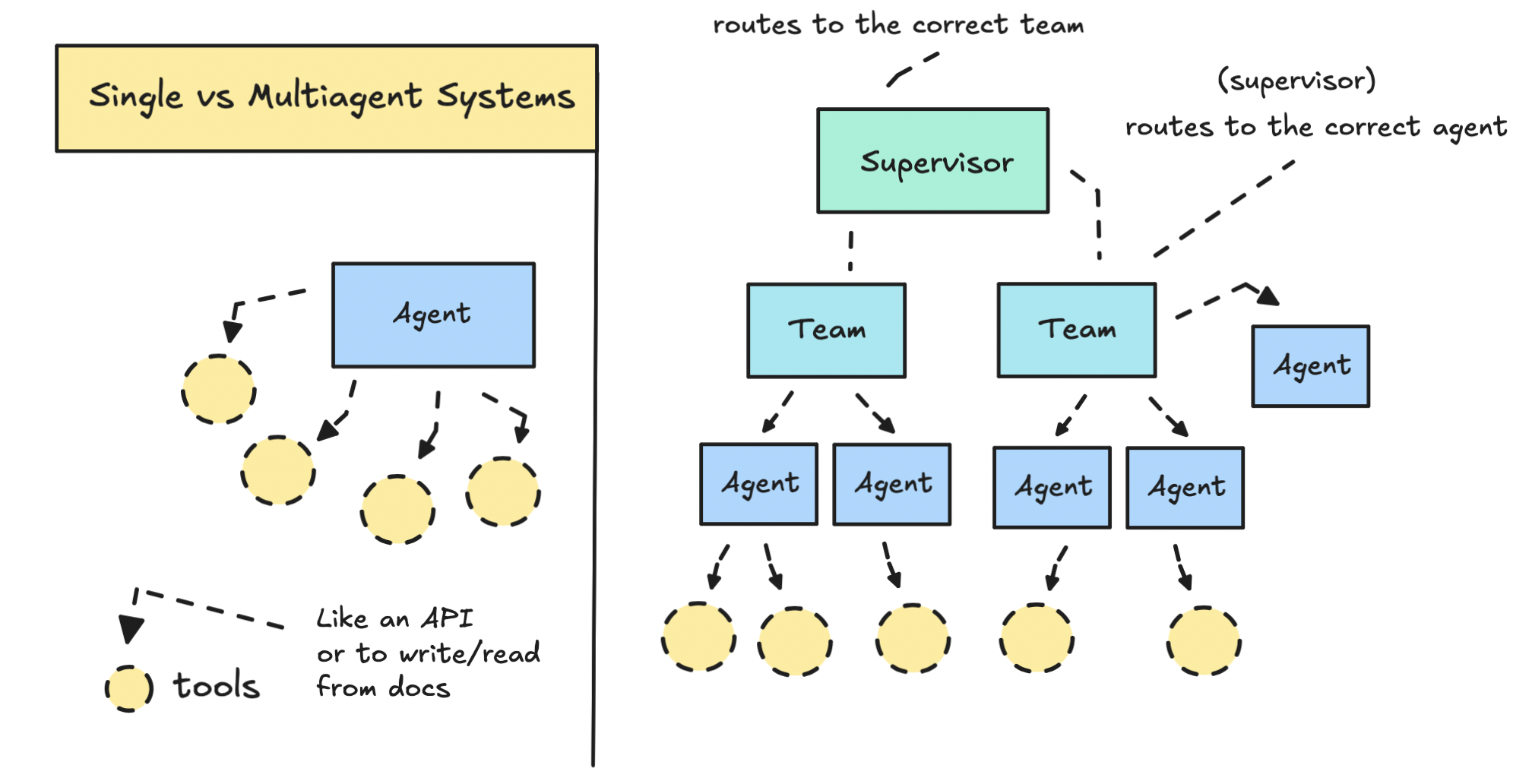 Comparing the linear approach of single agents with the collaborative, networked approach of multiagent systems.
Furthermore, MAS can handle parallel processing more effectively. While a single agent must process information sequentially, a multiagent system can tackle multiple parts of a problem simultaneously, significantly reducing the time required to reach a solution. This is particularly valuable in fields like scientific research, where agents can simulate thousands of experiments in parallel to identify promising new materials or drug candidates.
Challenges in Orchestration and Governance
Despite their promise, multiagent systems introduce new challenges, particularly in the areas of orchestration and governance. Ensuring that a group of autonomous agents remains aligned with human intent requires sophisticated monitoring and control mechanisms. Issues such as "agent loops"—where agents get stuck in endless cycles of unproductive communication—must be managed through robust architectural design.
There are also significant ethical and security considerations. As agents gain the ability to act on behalf of users—making purchases, accessing private data, or interacting with other systems—the potential for misuse or unintended consequences grows. The industry is currently racing to develop "Guardrail Agents" whose sole purpose is to monitor the behavior of other agents, ensuring they adhere to safety protocols and ethical guidelines.
The Future: Toward an Agentic Internet
Looking ahead, the influence of multiagent systems is expected to extend beyond individual organizations to the internet at large. We are moving toward an "Agentic Internet," where AI agents representing different individuals and companies interact seamlessly. Your personal AI assistant might negotiate with a travel agent's AI to book a vacation, while simultaneously coordinating with your smart home's AI to ensure your house is prepared for your return.
This interconnected web of intelligent agents promises to make our digital lives more efficient and personalized. However, it also requires the development of universal standards for agent communication and identity verification. The work being done today in MAS is laying the foundation for this future, defining the protocols and architectures that will govern the next decade of digital interaction.
Conclusion
Multiagent systems represent the next logical step in the AI journey. By embracing decentralization, specialization, and collaboration, MAS is unlocking new levels of capability that were previously out of reach for single-model approaches. As we continue to refine the tools and frameworks for building and managing these systems, the impact of collaborative AI will be felt across every sector of society. The era of the lone AI is ending; the era of the agentic collective has begun.