The Great Currency Shift: Navigating the 2026 Global Financial Realignment
The year 2026 will be remembered in economic history books as the year the "unipolar financial world" finally gave way to a complex, multipolar reality. For over eight decades, the US Dollar (USD) reigned supreme as the undisputed global reserve currency, facilitating the vast majority of international trade and providing a bedrock of stability for global markets. However, a combination of persistent domestic inflation, shifting geopolitical alliances, and the rapid maturation of digital financial infrastructure has triggered what many are calling The Great Currency Shift.
The Erosion of Dollar Hegemony
The challenges to the US Dollar's dominance have been building for years, but 2026 has seen these pressures reach a critical mass. The use of financial sanctions as a tool of foreign policy has accelerated the search for alternatives among both allies and adversaries. Central banks around the world, particularly in the Global South, have been diversifying their reserves at a record pace, moving away from US Treasuries and toward gold, regional currencies, and even basket-based digital assets.
 The global financial landscape is transitioning from a USD-centric model to a diversified, digital-first ecosystem.
This "de-dollarization" is not just a political statement; it is an economic necessity for many nations seeking to protect themselves from the volatility of US monetary policy. As the US struggles with its debt-to-GDP ratio, the "exorbitant privilege" of the dollar is being questioned by investors who are looking for more resilient stores of value.
The BRICS+ Expansion and the New Trade Protocols
A major catalyst for this shift has been the expansion and institutionalization of the BRICS+ bloc. By mid-2026, the group has grown to include several of the world's largest energy producers and fastest-growing economies. More importantly, the BRICS+ New Development Bank has successfully launched a cross-border payment system that bypasses traditional Western-led networks like SWIFT.
This new system utilizes a "unit of account" backed by a basket of commodities and regional currencies, allowing member states to trade oil, gas, and minerals without ever touching the US Dollar. This has significantly reduced transaction costs for these nations and insulated them from Western financial pressure. The "Petrodollar" era, which underpinned global finance since the 1970s, is effectively being replaced by a more fragmented but arguably more balanced "Petro-multipolarity."
The Rise of Central Bank Digital Currencies (CBDCs)
While geopolitical shifts provide the context, technology is providing the mechanism for this realignment. 2026 is the year Central Bank Digital Currencies (CBDCs) have moved from pilot programs to full-scale implementation in over 40 major economies. The Digital Yuan (e-CNY) and the Digital Euro are now widely used for international settlements, offering near-instant clearing and settlement times that traditional banking systems cannot match.
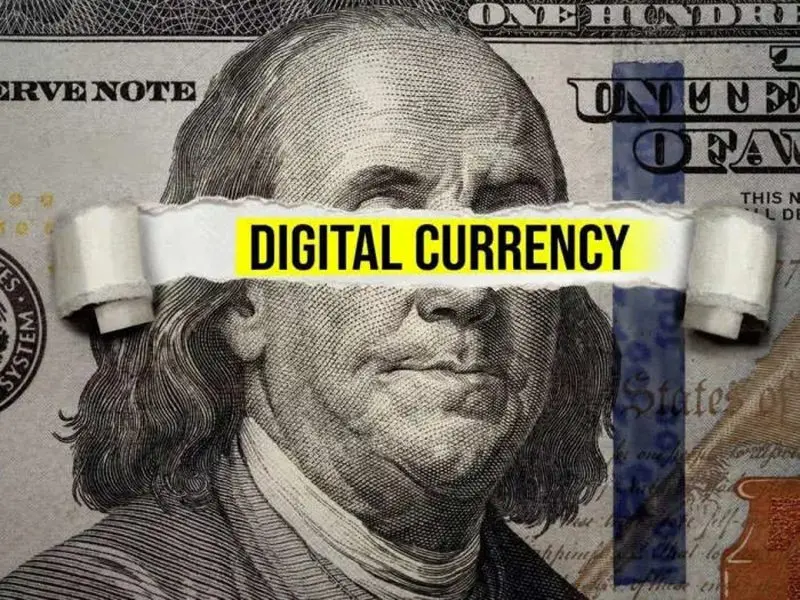 CBDCs are redefining the relationship between citizens, banks, and the state, offering new levels of programmable money.
CBDCs are not just digital versions of cash; they are programmable assets. This allows for automated tax collection, instant disbursement of social subsidies, and the implementation of smart contracts in international trade. For example, a shipment of Brazilian soy to China can now be automatically paid for the moment the digital bill of lading is verified on a shared ledger, eliminating the need for intermediary banks and reducing the risk of fraud.
The Institutionalization of Decentralized Finance (DeFi)
Parallel to the rise of state-backed digital currencies, the world of Decentralized Finance (DeFi) has reached a level of maturity that was unthinkable just a few years ago. In 2026, "Hybrid Finance" (HyFi) has become the norm, where traditional institutional players use DeFi protocols for liquidity management and asset tokenization.
The tokenization of Real-World Assets (RWA)—including real estate, gold, and even corporate debt—has created a 24/7 global marketplace that is highly liquid and accessible. This has allowed smaller investors to participate in markets that were previously the domain of institutional giants. Stablecoins, now strictly regulated and fully backed by transparent reserves, serve as the primary "bridge" between the old world of fiat and the new world of on-chain finance.
The Impact on the Global Consumer
For the average citizen, The Great Currency Shift is felt most acutely in the changing cost of living and the way they interact with money. In the United States and Europe, the shift has led to a period of structural adjustment as the cost of imports rises and the "inflation tax" of a weakening currency becomes a daily reality. Conversely, in many emerging markets, the ability to trade in local currencies has provided a boost to domestic industries and reduced the burden of dollar-denominated debt.
The "Wallet Wars" of 2026 are in full swing, with tech giants, banks, and governments competing to be the primary interface for the consumer's digital assets. A typical smartphone wallet now holds a variety of assets: local CBDC for daily expenses, tokenized gold for long-term savings, and various "utility tokens" for specific services. The concept of a single "bank account" is becoming obsolete, replaced by a diversified digital portfolio.
Geopolitical Risks and the "Digital Iron Curtain"
The transition to a multipolar financial system is not without significant risks. The world is facing the potential for a "Digital Iron Curtain," where the global financial system splits into two or more incompatible technological blocs. One bloc might be centered around the Western-led "Tokenized USD" ecosystem, while another operates on the BRICS+ "mBridge" platform.
This fragmentation could lead to decreased global efficiency and increased friction in international cooperation. There is also the persistent threat of cyber-warfare targeting these new digital infrastructures. As money becomes pure data, the security of the underlying ledgers becomes a matter of national security. The "Great Reset" of 2026 requires not just new technology, but new international treaties to govern the digital financial commons.
Conclusion: A New Era of Financial Complexity
The Great Currency Shift of 2026 marks the end of a simple, dollar-denominated world and the beginning of an era of unprecedented financial complexity. While this transition brings volatility and uncertainty, it also offers the potential for a more inclusive and efficient global economy. The democratization of access to financial tools and the reduction of reliance on a single national currency could, in the long run, lead to a more stable global order.
As we move forward, the winners will be those—whether nations, corporations, or individuals—who can navigate this hybrid landscape. Flexibility, digital literacy, and a global perspective are no longer optional; they are the essential tools for survival in the new financial frontier. The dollar may no longer be the only game in town, but the new game is just beginning.