The Agentic AI Revolution: How Autonomous Agents are Reshaping Search and Beyond
The landscape of artificial intelligence is undergoing a profound transformation with the emergence of Agentic AI. These autonomous agents, capable of understanding complex instructions, planning multi-step actions, and executing tasks without constant human oversight, are rapidly moving from theoretical concepts to practical applications. Their impact is already being felt across various industries, most notably in the realm of search and digital advertising, where they promise to redefine how we interact with information and services.
Google I/O 2026: A Glimpse into the Agentic Future
Google I/O 2026 served as a pivotal moment, showcasing the tech giant's deep commitment to an agentic future. The company unveiled a sweeping expansion of AI-powered Search, anchored by Gemini 3.5 Flash and featuring Antigravity, an agentic search experience that allows users to leverage AI agents simply by asking a question. This move signifies a fundamental shift in how Google envisions search, moving beyond mere information retrieval to proactive task completion.
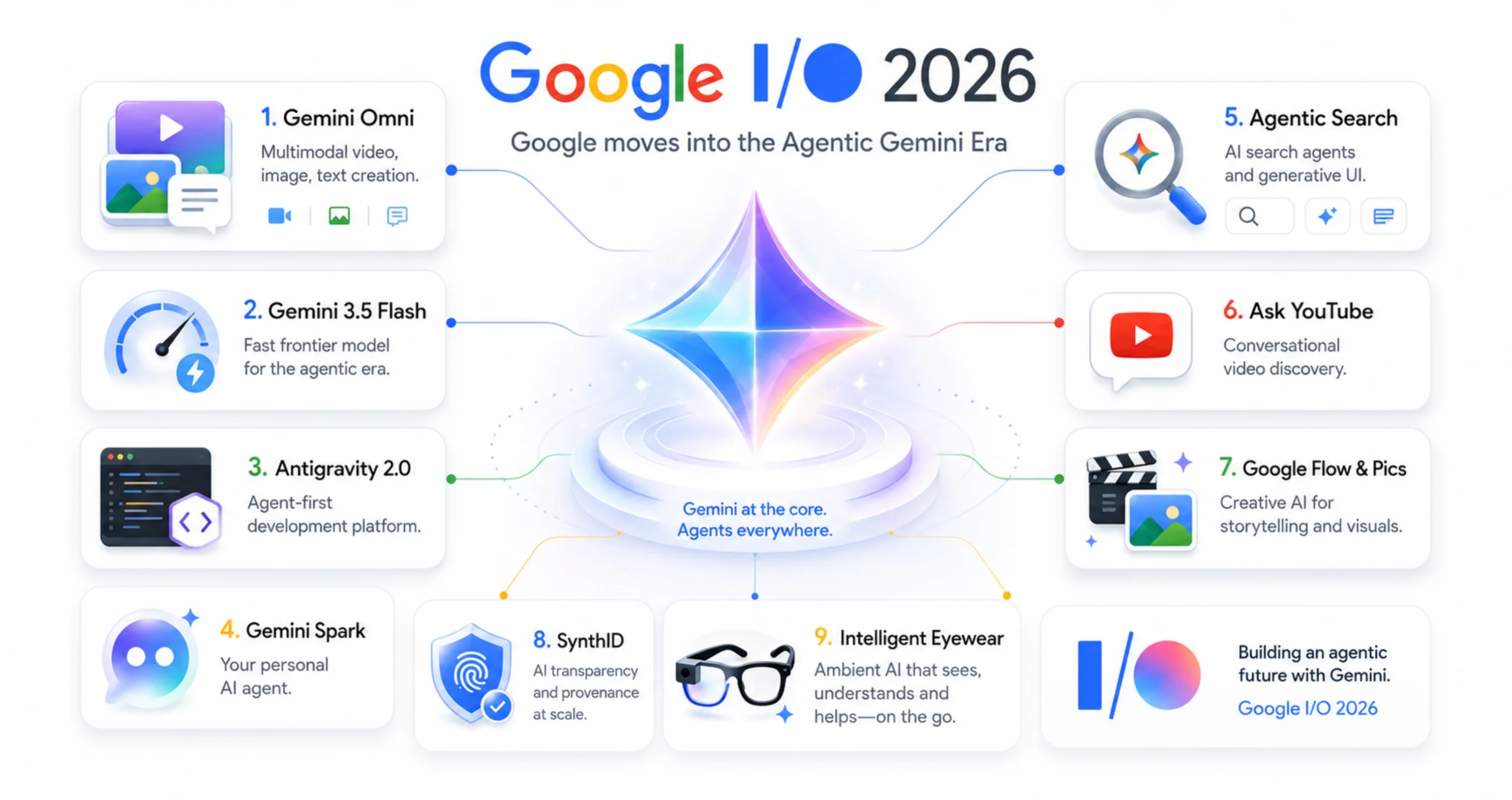 Google I/O 2026 highlighted the integration of Agentic AI into search and other services.
Traditionally, search engines have acted as sophisticated indexes, providing links to relevant information. Agentic AI, however, aims to transform this paradigm. Instead of presenting a list of results, an agentic search engine, powered by advanced models like Gemini, can understand a user's intent, break down complex queries into sub-tasks, gather information from various sources, synthesize it, and even execute actions on behalf of the user. For instance, a query like "Plan a weekend trip to Kyoto for two, including flights, accommodation, and a cultural itinerary," could be handled end-to-end by an AI agent, booking flights, reserving hotels, and suggesting activities, all within the search interface.
The Rise of Agentic Advertising
The implications of Agentic AI extend far beyond traditional search. The advertising industry, in particular, is bracing for a significant overhaul, giving rise to what is being termed Agentic Advertising. As AI agents become the primary interface through which users interact with the digital world, advertisers will need to adapt their strategies to reach these autonomous entities rather than directly targeting human users.
This shift presents both challenges and opportunities. On one hand, advertisers will need to develop sophisticated AI-driven campaigns that can effectively communicate with and influence AI agents. This might involve optimizing content for agent consumption, ensuring brand messages are accurately interpreted, and even participating in agent-to-agent negotiations for product recommendations or service bookings. On the other hand, agentic advertising could lead to highly personalized and efficient campaigns, as AI agents can filter out irrelevant information and present users with only the most pertinent and valuable offerings.
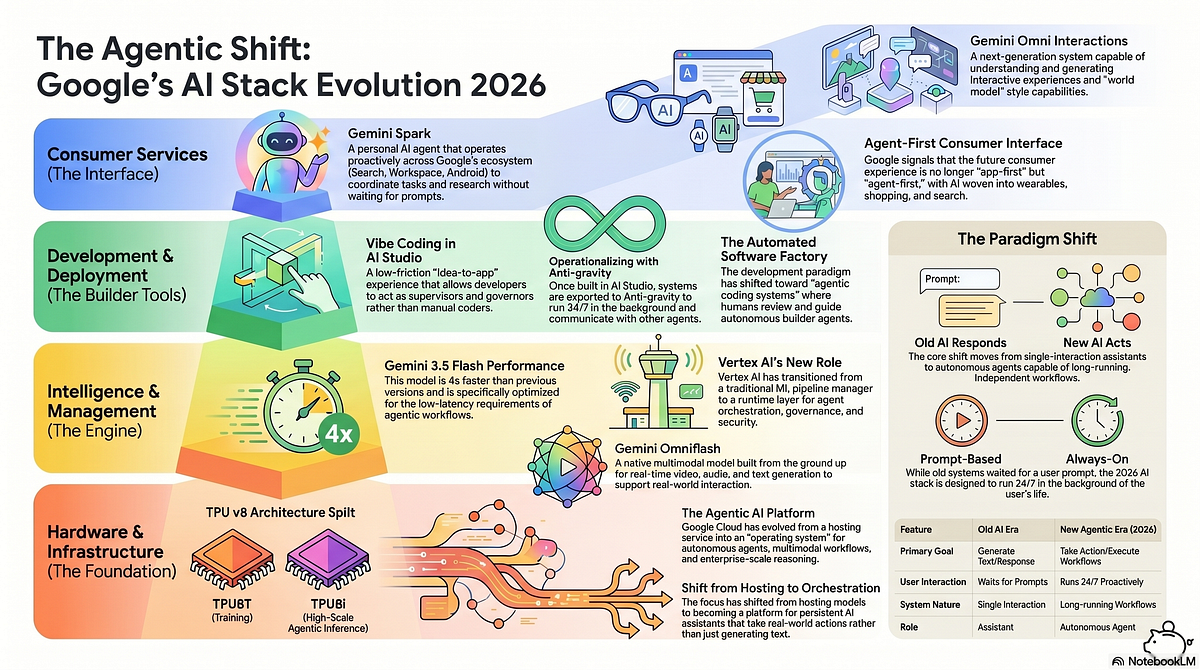 The evolution of Google's AI stack, emphasizing the shift towards agentic systems.
Key Trends in Agentic AI for 2026
Several key trends are shaping the development and adoption of Agentic AI in 2026:
-
Autonomous Agents in Enterprise: Businesses are increasingly deploying AI agents to automate complex workflows, from customer service and supply chain management to data analysis and strategic planning. These agents can handle routine tasks, freeing up human employees to focus on more creative and strategic initiatives.
-
Personalized AI Companions: Beyond enterprise applications, personalized AI companions are becoming more sophisticated, acting as digital assistants that learn user preferences, anticipate needs, and proactively manage various aspects of daily life, from scheduling appointments to managing finances.
-
Ethical AI and Governance: As AI agents gain more autonomy, concerns about ethics, bias, and accountability are growing. The development of robust AI governance frameworks and ethical guidelines is becoming paramount to ensure responsible deployment and prevent unintended consequences.
-
Multi-Modal Agentic Systems: The integration of various AI capabilities, such as natural language processing, computer vision, and speech recognition, is leading to the creation of multi-modal agents that can interact with the world in more human-like ways, understanding and generating content across different formats.
-
Agentic AI in Creative Industries: From generating marketing copy and designing graphics to composing music and scripting videos, AI agents are increasingly assisting and even leading creative processes, blurring the lines between human and artificial creativity.
Challenges and the Road Ahead
Despite the immense potential, the Agentic AI revolution is not without its challenges. Ensuring the reliability and trustworthiness of autonomous agents, addressing potential job displacement, and navigating the complex ethical and regulatory landscape are critical hurdles that need to be overcome. The development of robust security measures to protect against malicious agent behavior and data breaches is also a top priority.
Furthermore, the interoperability of different AI agents and platforms will be crucial for the widespread adoption of agentic systems. Standards and protocols will need to be established to allow agents to communicate and collaborate seamlessly, creating a truly interconnected ecosystem of intelligent automation.
Conclusion
Agentic AI represents a paradigm shift in the way we conceive and interact with artificial intelligence. From transforming search engines into proactive task completers to revolutionizing advertising and automating complex business processes, autonomous agents are poised to reshape our digital and physical worlds. While challenges remain, the rapid pace of innovation suggests that Agentic AI will continue to be a dominant force in technology, driving unprecedented levels of efficiency, personalization, and automation in the years to come. The future is agentic, and understanding its implications is key to navigating the evolving technological landscape.