SpaceX's Historic IPO Mints the World's First Trillionaire
The financial and technological landscapes experienced a seismic shift this week as SpaceX, the aerospace manufacturer and space transportation company founded by Elon Musk, completed its highly anticipated Initial Public Offering (IPO). The event, which took place on the Nasdaq exchange, not only shattered previous records for capital raised but also propelled Musk to a historic milestone: becoming the world's first trillionaire. This article delves into the details of the IPO, the market's reaction, and the broader implications for the space industry and global economy.
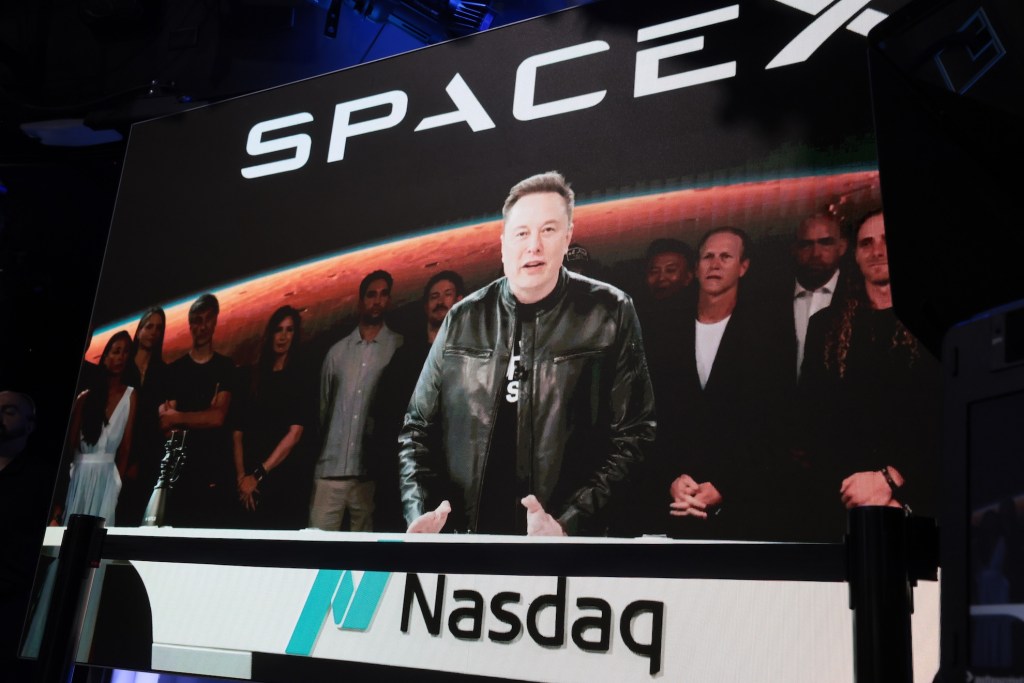 Elon Musk celebrating the SpaceX IPO at the Nasdaq MarketSite.
The Record-Breaking Debut
SpaceX's journey to the public markets has been a subject of intense speculation for years. The company, known for its reusable rockets and the ambitious Starlink satellite internet constellation, finally took the plunge, pricing its 555.6 million shares at $135 each. This move was designed to raise an initial $75 billion, a figure that easily eclipsed previous IPO records. However, the sheer volume of investor interest pushed the total raised to an astonishing $85.7 billion. When trading commenced on June 12, 2026, the shares opened at $150, representing an immediate 11% premium over the offering price. The momentum did not wane; by midday, the stock had surged 30%, eventually closing at $160.95, a 19% increase from the initial price. This unprecedented demand caused significant strain on retail trading platforms, with Robinhood reporting "record-breaking traffic" in the hours following the debut.
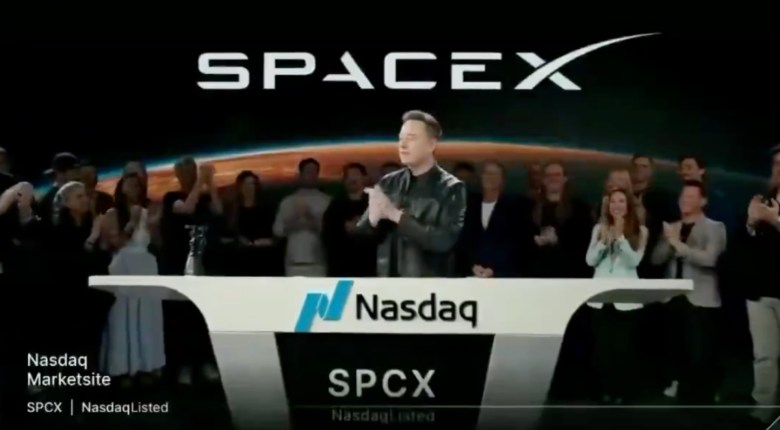 The SpaceX listing displayed prominently at the Nasdaq.
The Trillion-Dollar Milestone and Company Insights
The most headline-grabbing outcome of the SpaceX IPO was its impact on Elon Musk's net worth. As the primary shareholder of SpaceX, alongside his significant holdings in Tesla, xAI, and other ventures, the massive valuation of SpaceX post-IPO pushed Musk's personal wealth past the $1 trillion mark. This unprecedented concentration of wealth has sparked widespread discussion regarding economic inequality, the power dynamics of modern billionaires, and the influence Musk wields over critical global infrastructure, from satellite communications to electric vehicles.
The IPO filing itself, the S-1 document, provided a rare glimpse into the financial workings of the notoriously secretive company. It revealed a business heavily reliant on its Starlink division, which has become a crucial communication tool globally, alongside significant investments in artificial intelligence through its xAI division. The document also disclosed more than $37 billion in accumulated losses, highlighting the immense capital required to sustain SpaceX's ambitious projects, such as the Starship program.
The Future of Starship and Reusability: A Critical Juncture
While the financial success of the IPO is undeniable, the S-1 filing also raised questions about the future of SpaceX's most ambitious project: the Starship rocket. Designed to be fully reusable and capable of carrying humans to Mars, Starship is central to Musk's long-term vision. However, the IPO documents suggest that the path to full reusability may be more complex and protracted than previously anticipated.
The recent Starship test flights have provided crucial data, but they also underscore the immense engineering challenges that remain. Investors and industry analysts are closely monitoring SpaceX's progress, as the success of Starship is critical to justifying the company's astronomical valuation. The ability to rapidly and cost-effectively launch massive payloads into orbit is the linchpin of SpaceX's business model, particularly for the continued expansion of the Starlink network. The company's commitment to pushing the boundaries of space exploration remains unwavering, but the path ahead for Starship will require continued innovation and significant capital investment.
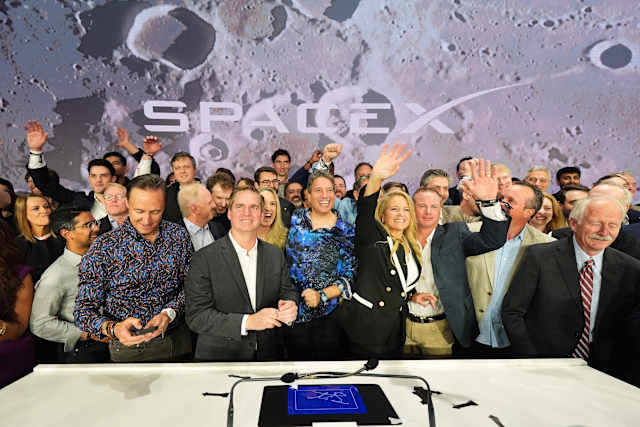 Celebrations marking the successful launch of SpaceX on the public markets.
Strategic Partnerships and the AI Nexus
The SpaceX IPO also shed light on the company's deepening ties with the artificial intelligence sector. The S-1 filing detailed significant compute agreements, including a massive $920 million per month contract with Google for computational resources. Furthermore, the filing highlighted the financial interplay between SpaceX and Musk's AI venture, xAI, which reportedly burned through $6.4 billion in the previous year.
These revelations underscore the convergence of space exploration and artificial intelligence. The vast amounts of data generated by satellite networks like Starlink require immense computational power to process and analyze. By integrating AI capabilities, SpaceX aims to optimize its operations, enhance satellite performance, and develop new services. The strategic partnerships with tech giants like Google and the internal synergies with xAI position SpaceX at the forefront of this technological intersection, promising a future where AI plays an even more integral role in humanity's reach beyond Earth.
Market Implications and Future Outlook
The success of the SpaceX IPO has broader implications for the stock market and the venture capital ecosystem. It serves as a powerful catalyst, potentially opening the floodgates for other highly valued private companies to enter the public markets. The "halo effect" of the SpaceX debut is already being felt, with increased activity in secondary markets and heightened anticipation for other potential tech IPOs.
However, the S-1 filing also contained a warning for prospective investors regarding future dilution. SpaceX indicated that it might issue significant equity in future transactions, a move that could impact the value of existing shares. This disclosure has also fueled ongoing rumors of a potential merger between SpaceX and Tesla, a scenario that SpaceX COO Gwynne Shotwell hinted might "make Elon's life a little easier." As the dust settles on this historic IPO, the focus now shifts to execution. SpaceX must deliver on its ambitious promises, from achieving full reusability with Starship to expanding the profitability of Starlink. The company's unprecedented valuation demands flawless performance, and the world will be watching closely as SpaceX navigates the challenges and opportunities of being a public entity, shaping not just the future of space, but also the global economy.