Synthetic Biology Comes of Age: From Lab Curiosity to Industrial Platform in 2026
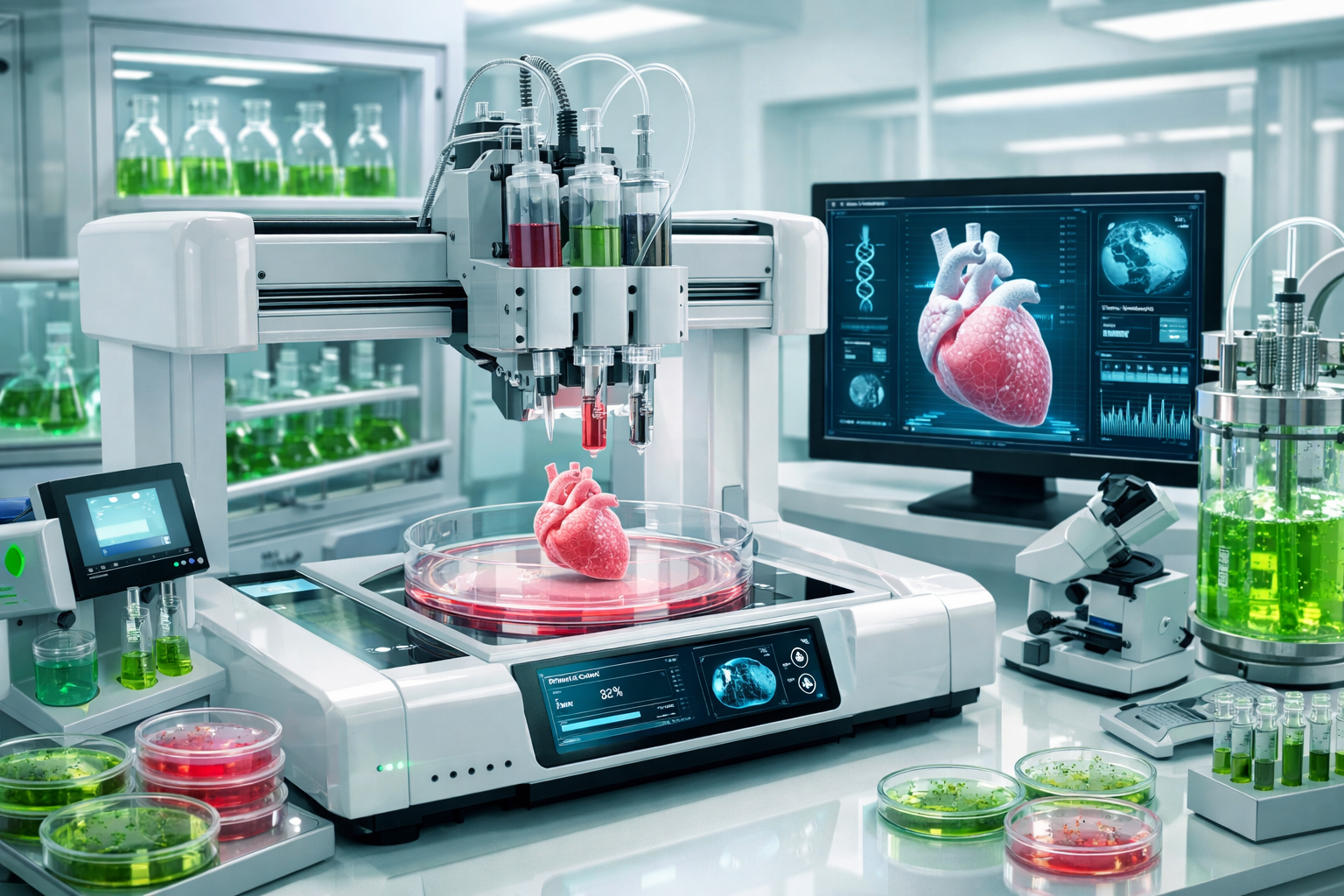
Somewhere in a climate-controlled facility outside of Boston, a vat of engineered yeast is producing a key intermediate compound for one of the world's best-selling cancer therapies. In a converted dairy plant in the Netherlands, bacterial cultures are fermenting plant waste into biodegradable packaging material that will arrive on supermarket shelves before the end of the month. In Shenzhen, a genomics company has just completed the first fully computational design-to-synthesis cycle for a novel antimicrobial peptide—from AI-generated sequence to functional protein in eleven days, a process that would have taken years a decade ago.
Welcome to synthetic biology in 2026. The field that Craig Venter put on the popular map in 2010 by synthesizing a bacterial genome from scratch, that iGEM teams spent the following decade exploring in academic competitions, and that a wave of well-funded startups have been attempting to commercialize since 2018 has, in the past eighteen months, crossed a threshold that the industry's most optimistic participants were projecting but few were certain would arrive this quickly. Synthetic biology is no longer primarily a research discipline or a collection of intriguing proofs of concept. It is becoming an industrial platform—and the implications for pharmaceuticals, agriculture, materials, energy, and consumer products are only beginning to come into focus.
What Changed: The Convergence That Made It Real
Synthetic biology is not a new idea, and its promise has been described in breathless terms before. The question worth addressing at the outset is: why now? What changed between the previous cycles of synthetic biology hype and the current moment of genuine commercial traction?
The answer is a convergence of four enabling capabilities that have each matured independently and are now amplifying each other.
AI-driven protein design. The publication of AlphaFold 2 in 2021 began a revolution in structural biology that has continued to accelerate. By 2026, the successors to AlphaFold—including systems from Evolutionary Scale, David Baker's lab at the University of Washington, and a growing ecosystem of commercial startups—can not only predict the structure of natural proteins with near-perfect accuracy but design entirely novel proteins with specified functional characteristics from scratch. Want a protein that binds to a specific receptor with femtomolar affinity, is stable at 70 degrees Celsius, and can be expressed efficiently in E. coli? Specify the requirements computationally and receive candidate sequences within hours. Test the top candidates. Iterate. The design cycle that previously took teams of structural biologists years to work through can now be compressed to weeks.
Rapid DNA synthesis and assembly. The cost of synthesizing DNA has followed a trajectory that makes Moore's Law look modest. In 2003, the cost of synthesizing a single base pair of DNA was approximately $4. Today it is below $0.001, and the turnaround time for a synthesized gene of thousands of base pairs has fallen from months to days. Companies like Twist Bioscience, Integrated DNA Technologies, and a new cohort of platforms using enzymatic synthesis rather than traditional phosphoramidite chemistry are driving costs and times toward levels where rapid iteration of biological designs is economically viable at industrial scale.
Cell-free expression systems. One of the persistent friction points in synthetic biology has been the cell: the organism you use to express your engineered pathway is itself a complex, evolved system with its own metabolic priorities, regulatory networks, and survival imperatives that don't always align with what you want it to produce. Cell-free systems—purified transcription and translation machinery operating outside of any living cell—eliminate much of this friction. They are faster to set up, easier to standardize, more tolerant of toxic products, and more directly amenable to computer-aided optimization. Cell-free synthetic biology has moved from academic novelty to industrial platform in the past two years, enabling a new category of high-value product manufacturing that was previously impractical.
Automation and the biofoundry model. The fourth convergent enabling technology is the biofoundry: a highly automated laboratory facility that can execute the design-build-test-learn cycle of synthetic biology at the throughput and consistency required for industrial applications. Biofoundries combine robotic liquid handling, automated cell culture, high-throughput analytical instruments, and AI-driven data analysis into a platform that can run thousands of experimental variants in parallel, generating the data density needed to train predictive models and identify high-performing biological designs. The UK's National Robotarium, the Edinburgh Genome Foundry, the Ginkgo Bioworks platform, and a growing number of internal biofoundries at major pharmaceutical and chemical companies represent the new standard for synthetic biology development at scale.
Where Synthetic Biology Is Delivering Value Today
The commercial landscape of synthetic biology in 2026 spans a remarkable range of industries and applications. The field's defining characteristic—its potential applicability to any product or process whose key transformation step is biological—is not a theoretical virtue but a demonstrated reality.
Pharmaceuticals: From Fermentation to Precision Biosynthesis
Pharmaceutical manufacturing has always been one of synthetic biology's most promising application domains, and 2026 finds that promise being substantially realized. The key development is the application of AI-guided metabolic pathway design to the production of complex natural products and their derivatives—a category of therapeutically important molecules that includes many antibiotics, anticancer agents, immunosuppressants, and pain medications, and that have historically required either inefficient chemical synthesis or complex multi-step extraction from biological sources.
Inari Agriculture's engineered microorganism platform, Zymergen's (now part of Ginkgo) materials platform, and a cohort of specialized pharmaceutical synthetic biology companies have all announced commercial-scale production achievements in the past twelve months that represent genuine milestones. Among the most significant: the first synthetic biology production route for a key intermediate in the manufacture of a GLP-1 receptor agonist—the class of diabetes and obesity drugs that has been in chronic shortage due to production capacity constraints—using an engineered Pichia pastoris yeast strain that achieves a 40% yield improvement over the previous fermentation process.
The antimicrobial pipeline is receiving particular attention. With antibiotic-resistant infections now causing an estimated 1.5 million deaths annually worldwide, and with the traditional pharmaceutical industry's investment in antibiotic development having declined to historically low levels, synthetic biology offers a path to systematically explore and produce entirely new classes of antimicrobial molecules that evolution has not optimized away from. Several AI-designed antimicrobial peptides are currently in clinical trials, and the speed of their development—measured in months rather than the decade-plus typical of conventional drug development—represents a potential structural improvement in how the pharmaceutical industry responds to emerging infectious threats.
Materials: The Biological Alternative to Petrochemicals
The materials sector may be where synthetic biology's industrial promise is most expansive. A significant fraction of the materials that modern economies depend on—plastics, textiles, solvents, adhesives, coatings, and a vast array of specialty chemicals—are currently derived from petrochemicals. Synthetic biology offers, in principle, a route to produce functionally identical or superior materials from renewable biological feedstocks, with lower carbon intensity and in some cases with improved material properties.
The progress in bioplastics is illustrative. Polyhydroxyalkanoates (PHAs)—biodegradable polyesters that can be produced by engineered bacteria using agricultural waste or CO₂ as feedstock—have been a synthetic biology target for twenty years. In 2026, PHA production costs have declined to the point where they are competitive with conventional plastics for an expanding range of packaging applications, driven by a combination of improved microbial strains, optimized fermentation processes, and favorable policy environments in the EU and several Asia-Pacific markets where single-use plastic restrictions have created market pull.
Engineered proteins as structural materials represent a frontier that is attracting substantial investment. Spider silk—famously stronger than steel at equivalent weight, highly flexible, and biodegradable—has been a synthetic biology target since the first spider silk genes were cloned in the 1990s. In 2026, Bolt Threads, Spiber, and AMSilk have all achieved commercial-scale production of recombinant spider silk proteins and are supplying them to premium textile and medical device manufacturers. The materials are extraordinary; the cost remains a constraint on broader adoption, but the trajectory is downward.
Agriculture and Food: Engineering the Supply Chain
The food system is one of the largest users of land, water, and energy on the planet, and one of the largest sources of greenhouse gas emissions. Synthetic biology offers multiple routes to reduce that footprint while improving nutritional outcomes—and in 2026, the most promising of those routes are moving from pilot to scale.
Nitrogen fixation engineering is perhaps the most consequential target. Nitrogen fertilizer production currently consumes approximately 2% of global energy and generates 1–2% of global greenhouse gas emissions; the application of synthetic fertilizer is associated with substantial nitrous oxide emissions from agricultural soils; and the over-application of nitrogen leads to water quality problems across major agricultural regions worldwide. Engineering crop plants to fix their own atmospheric nitrogen—a capability that legumes have achieved through symbiosis with soil bacteria—has been a long-standing goal of agricultural biotech. In 2026, Pivot Bio's nitrogen-fixing microbiome products are in commercial deployment on tens of millions of acres of corn and wheat. Several startups working on direct plant engineering for nitrogen fixation have shown proof-of-concept results in greenhouse trials, with field trials underway.
Precision fermentation—the production of animal-identical proteins, fats, and other food components using engineered microorganisms—is finding its commercial footing after several turbulent years for the alternative protein sector. While cell-cultivated meat has faced persistent challenges in achieving cost parity with conventional meat at scale, precision fermentation of specific proteins and fats for food ingredient applications has found a more tractable product-market fit. Perfect Day's dairy proteins, Remilk's casein and whey, and Ginkgo's flavor and fragrance ingredients are all in commercial production, and the category is growing.
The Regulatory and Biosecurity Landscape
The maturation of synthetic biology as an industrial platform has, predictably, attracted intensified regulatory attention—and not only for the familiar reasons of food safety and environmental impact. The dual-use potential of biological engineering capabilities raises genuine biosecurity concerns that policy makers are wrestling with in a context of rapid capability advancement.
The Biological Weapons Convention's verification challenges are not new, but the declining cost and increasing accessibility of DNA synthesis, gene editing, and other synthetic biology tools has materially changed the proliferation calculus over the past five years. The Nucleic Acid Observatory, a biosurveillance program initially proposed by pandemic preparedness researchers and now receiving government funding in the U.S., UK, and EU, aims to create a global surveillance network capable of detecting engineered biological threats in environmental and clinical samples in near-real-time.
On the commercial regulation side, the FDA, European Medicines Agency, and their counterparts in major markets have been updating frameworks for synthetic biology-derived products—including novel proteins produced by precision fermentation, bioengineered food ingredients, and therapeutics manufactured using synthetic biology production routes. The general direction is toward principles-based frameworks that evaluate the safety of the product rather than the nature of the production process, which represents a regulatory maturation that the industry has been seeking for years.

What Comes Next: The Horizon of Biological Manufacturing
The synthetic biology industry is at an inflection point that combines genuine commercial momentum with a set of technical and regulatory frontiers that will define its trajectory over the next decade.
The most significant near-term frontier is closing the design-build-test-learn loop with higher fidelity. Current AI protein design tools are extraordinarily powerful but still produce significant fractions of candidates that don't behave as predicted when expressed in cells. Improving the predictive accuracy of computational design—reducing the experimental burden required to identify high-performing variants—will unlock applications in complexity regimes that are currently out of reach.
Multicellular engineering represents the next wave of technical ambition. Most commercial synthetic biology today involves unicellular organisms—bacteria, yeast, algae. Engineering multicellular systems—complex organisms with differentiated cell types, developmental programs, and organ-level organization—is vastly more complex and is where the biological design challenges become qualitatively harder. This frontier includes engineered organisms for bioremediation of complex environmental pollutants, engineered agricultural plants with dramatically improved characteristics, and organoid-based biological manufacturing systems that leverage the specialized metabolic capabilities of differentiated cell types.
The convergence of synthetic biology with the AI infrastructure discussed elsewhere in the news cycle is worth noting explicitly. The protein design revolution that is enabling so many of the advances described in this article is itself a product of AI progress—the application of machine learning to the problem of understanding and engineering biological sequence-structure-function relationships. As AI capabilities continue to advance, the rate of biological design discovery is likely to accelerate in ways that are difficult to fully anticipate.
Synthetic biology in 2026 is not a story of promise finally fulfilled—it is a story of a platform that has become real enough to generate both genuine value and genuine risk, and that is developing fast enough that the institutions we rely on to govern it are working hard to keep up. That is, perhaps, the most honest possible description of a technology coming of age.