Artemis III Achieves Lunar Surface Milestone: First Automated Habitat Deployment
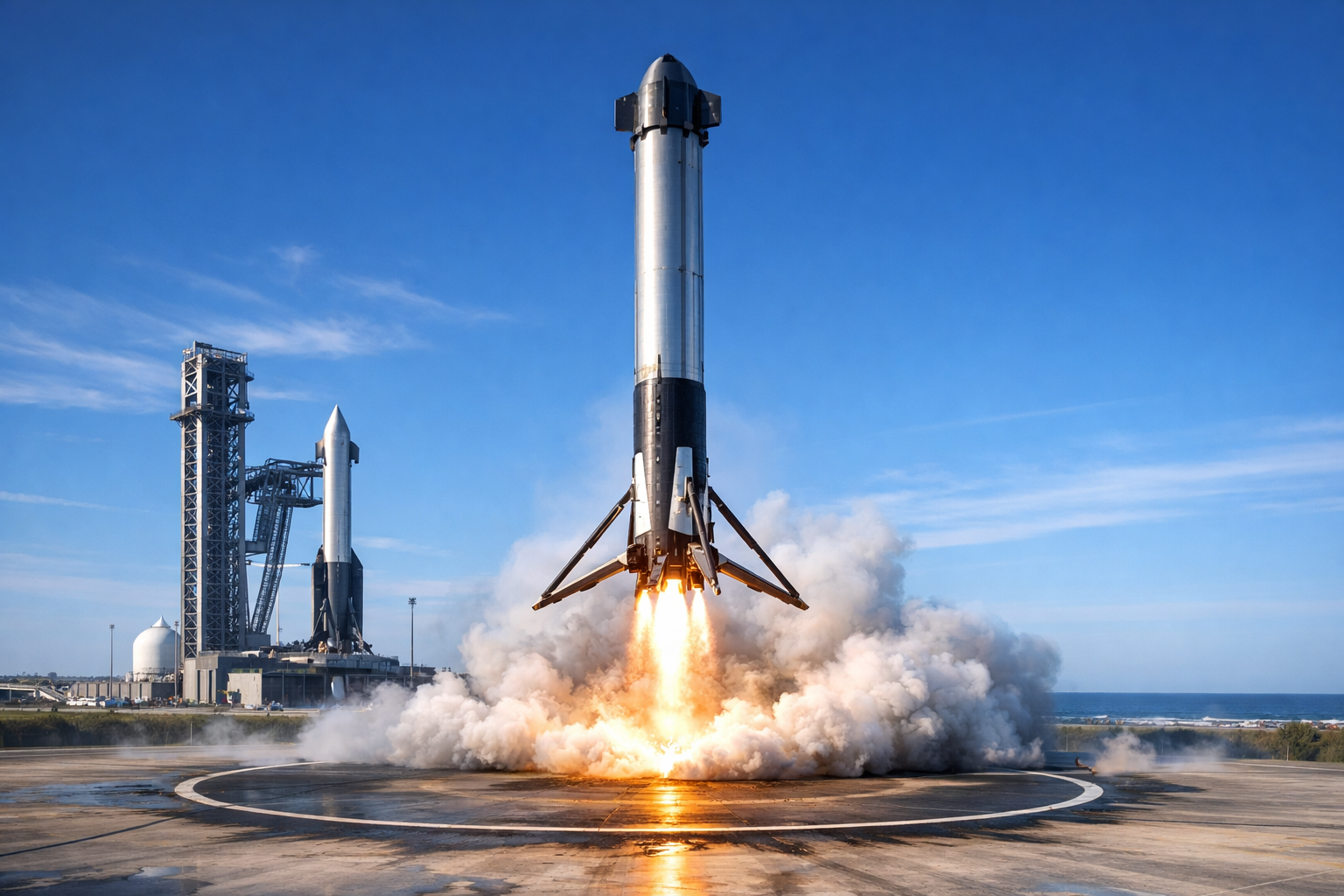
At 04:17 UTC on April 7, 2026, a set of robotic arms aboard the Artemis III Lunar Surface System unfolded with mechanical precision in the lunar regolith near the Shackleton Crater rim at the Moon's south pole. Over the next six hours and forty-three minutes, watched live by an estimated 2.4 billion people across streaming platforms worldwide, those robotic systems assembled and pressurized humanity's first permanently emplaced lunar habitat—without a single human hand on the lunar surface. The achievement marks the most significant milestone in human space exploration since the Apollo 11 landing in 1969, and it fundamentally redefines what "living on the Moon" means.
Mission controllers at NASA's Johnson Space Center erupted in applause at 11:00 UTC when the habitat's internal pressure sensors confirmed full seal integrity and the first solar array segment locked into its operational orientation. The room, which had been nearly silent for hours during the delicate deployment sequence, became a scene of tears and embraces that will be replayed in history documentaries for decades.
The Road to April 7: Years of Methodical Preparation
The successful habitat deployment today did not happen in isolation. It is the culmination of a multi-year, multi-mission campaign that has systematically addressed every prerequisite for permanent lunar surface presence.
Artemis I (2022) was uncrewed, validating the Space Launch System and Orion capsule on a circumlunar trajectory. Artemis II (2024) carried a four-person crew on the first crewed lunar flyby since Apollo 17 in 1972—an emotional mission that demonstrated crew life support, communication systems, and Orion's deep space performance with humans aboard.
Artemis III has been the most complex and ambitious mission yet. Launched 47 days ago, the mission's architecture divided responsibilities between two launch vehicles: the SLS carrying the crewed Orion capsule, and a separate SpaceX Starship HLS (Human Landing System) variant that had been pre-positioned at the lunar surface landing zone after a separate launch three months earlier. The Starship HLS carried the habitat modules, power systems, surface mobility units, and the autonomous deployment robotics that executed this morning's historic work.
The crew of Artemis III—Commander Sarah Chen, Mission Specialist Dr. Marcus Webb, Pilot Amara Osei, and Science Officer Dr. Yuki Tanaka—are currently aboard the Orion capsule in lunar orbit. They will descend to the surface in the Starship HLS once the habitat has passed a 72-hour autonomous systems validation period. The crew will become the first humans to set foot on the lunar surface since December 11, 1972.
The Habitat Itself: Engineering for Permanence
The structure deployed today is not a temporary shelter. It is designed for decades of continuous operation and represents a fundamental rethinking of what a lunar habitat needs to be.

The Lunar Surface Habitat Module (LSHM) was designed by a consortium led by Northrop Grumman with contributions from ESA, JAXA, and the Canadian Space Agency—reflecting the international character of the Artemis Program's later phases. It consists of three primary structures connected by pressurized tunnels:
The Primary Living Module (PLM) provides crew quarters, a common area, galley, and medical facilities for up to six occupants. The PLM is constructed from a novel composite material developed by NASA's Langley Research Center that provides radiation shielding equivalent to Earth's atmosphere while remaining light enough for practical transport. Internal volume is approximately 340 cubic meters—modest by terrestrial standards but spacious by the standards of previous space habitats.
The Operations and Science Module (OSM) houses the communication systems, life support controls, EVA suit preparation areas, and laboratory facilities designed for geological and astrophysical research. The south polar location is scientifically ideal: the permanently shadowed craters nearby are expected to contain water ice deposits that could be processed into drinking water and rocket propellant, dramatically reducing the cost and complexity of future missions.
The Power and Processing Module (PPM) contains the nuclear fission surface power system—a 10-kilowatt fission reactor developed by NASA in partnership with the Department of Energy—along with the primary water recycling systems, atmospheric processors, and the computational infrastructure that runs the habitat's autonomous systems. The fission power system is a critical upgrade from solar power alone; the south polar location provides excellent solar exposure for the arrays, but the nuclear backup ensures continuous power during lunar eclipses and dust events.
The Autonomous Deployment Achievement
The technical feat that makes today's milestone so remarkable is the fully autonomous deployment sequence executed without real-time human intervention. The 45-second communications delay between Earth and the Moon—round-trip—makes direct teleoperation impractical for the delicate, time-critical sequences involved in habitat assembly. The robotic systems had to act on their own.
The deployment system, developed by NASA's Jet Propulsion Laboratory in collaboration with Boston Dynamics and Astrobotic, consisted of four primary robotic units:
- CRANE-1 and CRANE-2: Heavy-lift robotic arms handling module positioning, structural connections, and pressurized tunnel mating
- SPIDER: A multi-limbed inspection robot that traversed every external joint and seal during assembly, using laser interferometry and thermal imaging to verify integrity
- ROVER: The four-wheeled surface mobility unit that staged materials, managed cable routing, and provided mobile camera coverage throughout the operation
The autonomous deployment software was validated through approximately 2,400 simulation runs and three full-scale physical simulations at NASA's Marshall Space Flight Center before flight. The deployment sequence executed today matched the nominal simulation profile within 3% across all major milestones—a testament to the quality of the pre-mission engineering.
What This Means for Humanity's Future in Space
The deployment of a permanent automated lunar habitat is not, in itself, a human presence on the Moon. Commander Chen and her crew won't touch the surface for at least 72 more hours. But what happened at 04:17 UTC today represents something profoundly important: proof that humanity can establish outposts in space autonomously, without constant human presence on site.

This changes the strategic calculus for all future space exploration. Autonomous habitat deployment means that infrastructure can be emplaced at a destination months or years before the human crew arrives—ready, tested, and operational on day one. For missions to Mars, where the communications delay is measured in minutes or tens of minutes rather than seconds, autonomous surface operations are not merely convenient; they are existentially necessary.
NASA's Moon to Mars Architecture, published in 2025, already incorporated autonomous habitat deployment as a foundational assumption. Today's successful execution validates that architecture and accelerates the timeline for every subsequent milestone. The next Artemis missions (IV through VI, scheduled through 2029) will each add modules, expanding the surface presence from a four-person habitat to a facility capable of hosting rotating crews of twelve.
The international dimension is also significant. The ESA, JAXA, and CSA contributions to today's habitat represent real stakes for three additional space agencies in the success of permanent lunar presence. Canada's involvement is particularly meaningful given its historic commitment to the Lunar Gateway—the orbital station that will serve as a staging post for future lunar surface operations—which is currently under construction and scheduled for initial occupancy in 2027.
The Broader Context: A New Space Age
It would be easy to view today's milestone as the culmination of the Artemis program—the end of a long journey that began with the cancellation of the Constellation Program in 2010 and meandered through budget battles and technical setbacks for a decade before the SLS finally flew in 2022. That reading would be wrong.
Today is not a culmination. It is a beginning.
The permanent habitat now sitting on the lunar south pole is a seed. It will grow. ESA's European Habitation Module is scheduled for integration in 2027. The commercial pressurized rovers that will allow surface expeditions of up to 30 days are under development by Toyota and Northrop Grumman. The In-Situ Resource Utilization (ISRU) pilot plant that will begin extracting water from the permanently shadowed craters is scheduled for deployment as part of Artemis V.
Within ten years, the Artemis base camp will be recognizable as a research station—modest by Antarctic analogy, but permanent, inhabited, and productive. The Moon, which humans visited briefly and then abandoned for over fifty years, is becoming a place humans live.
April 7, 2026: the day the Moon became home.